2025 C2C Photos

2025 C2C Photo Gallery


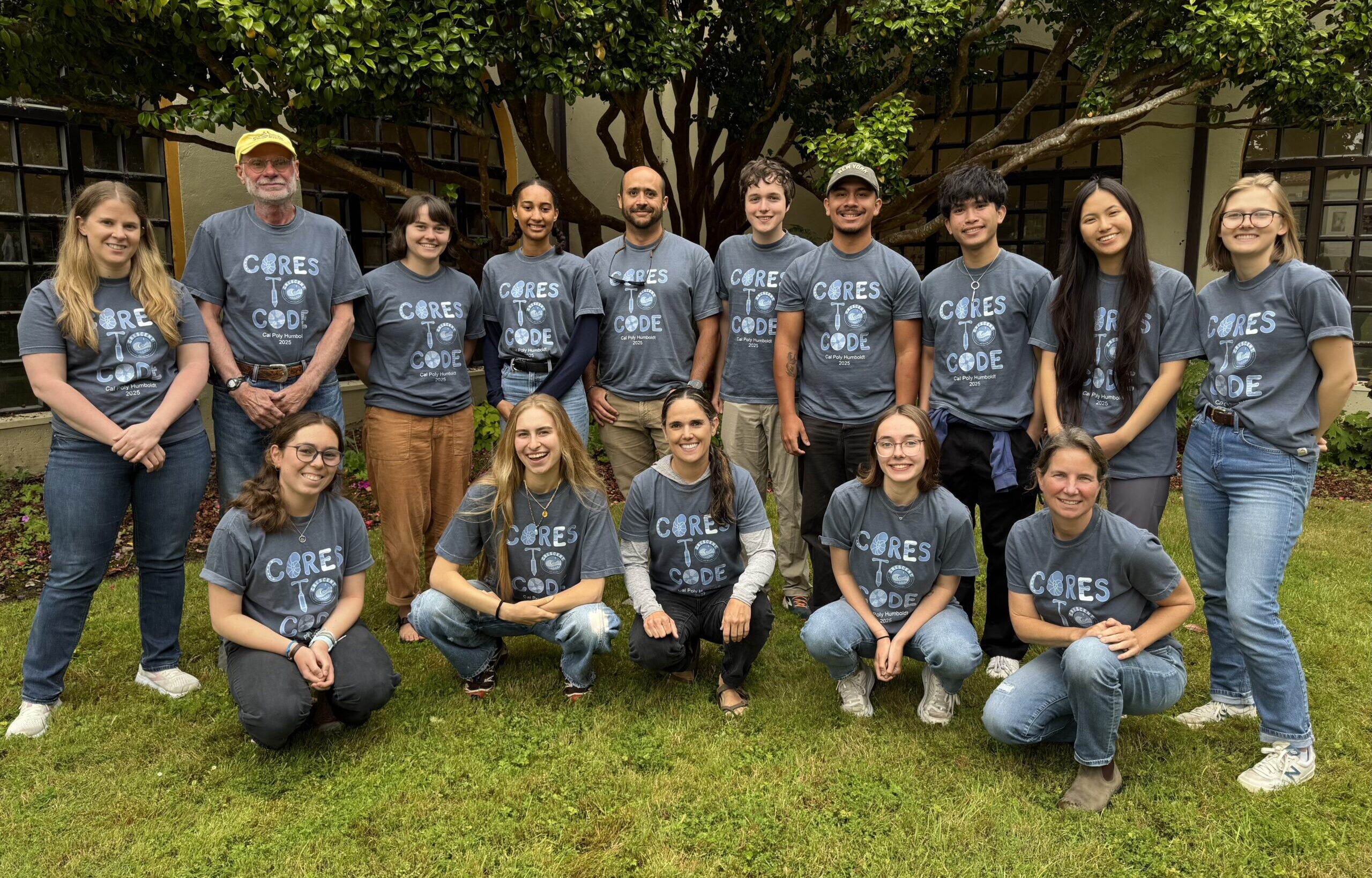
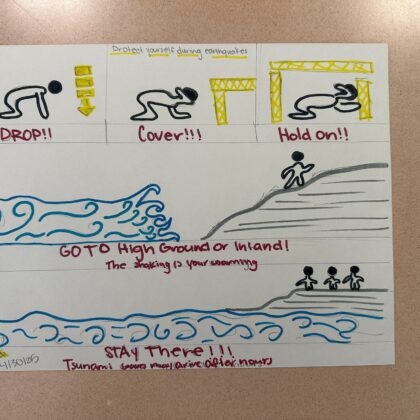
The main purpose of the site visit was to conclude the internship program that the interns have worked so hard on all year.
4. Makah CASE Final Visit Read More »
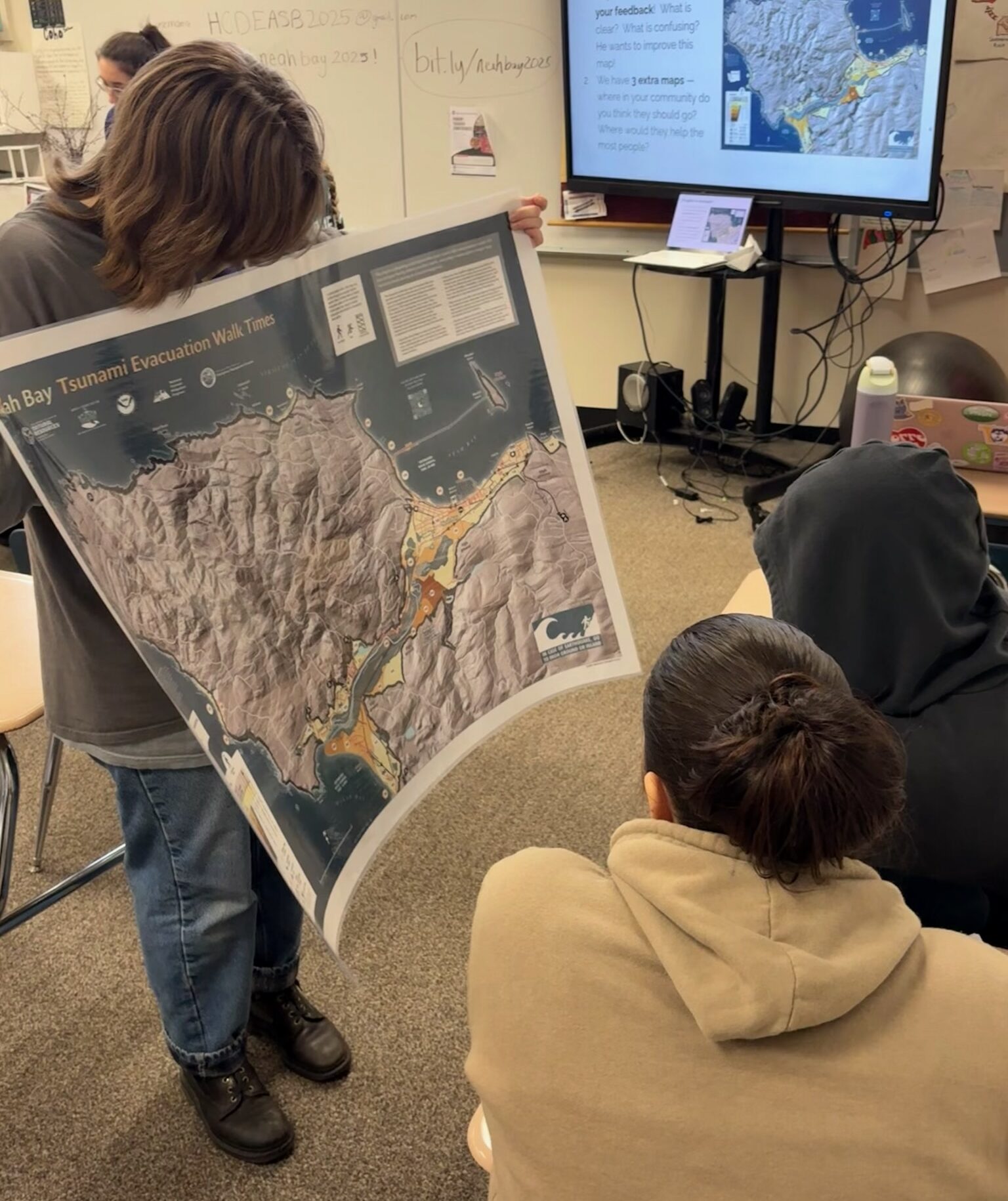
We spent a week teaching about local geohazards, learning cultural traditions of the Makah Tribe, and getting to know the students, teachers, and incredible Neah Bay community.
3. Makah CASE Spring Break Read More »
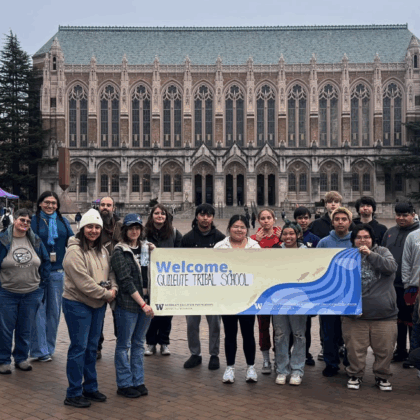
In February, the Quileute CASE and UW Riverways program co-hosted high schoolers and teachers from the Quileute Tribal School on UW’s campus.
3. QTS Campus Visit Read More »
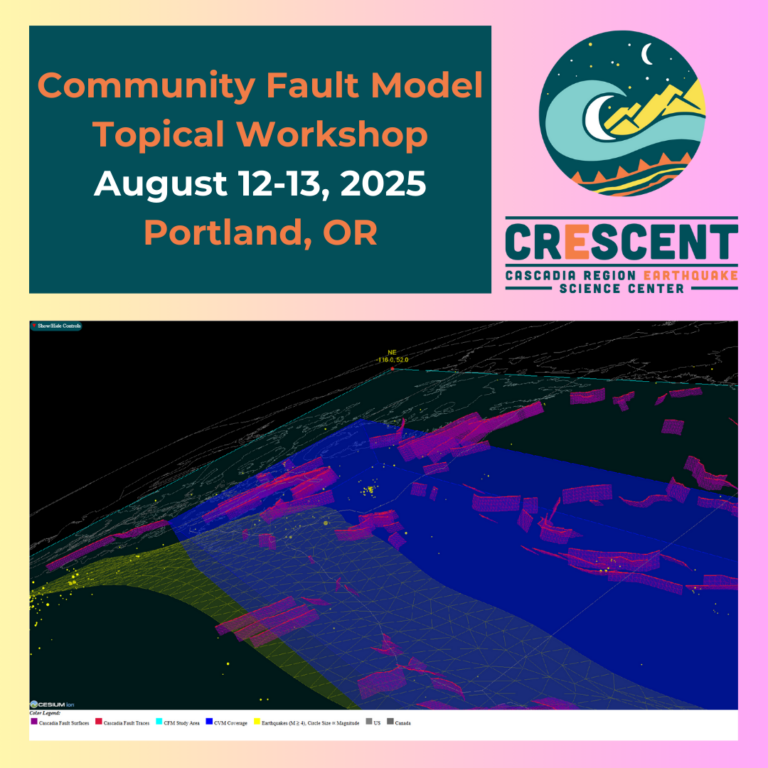
A workshop to solicit input from the community on the CRESCENT Community Fault Model (CFM) v1.0 and discuss improvements for future versions of the CFM. The workshop will highlight the current goals, criteria for inclusion, and status of the CFM. We welcome participants to share new results from both previously known and newly discovered fault systems in both onshore and offshore regions of Cascadia. The workshop will focus on faults in both the upper plate (North America), the lower plate (Juan de Fuca), and the plate interface.
Community Fault Model Topical Workshop Read More »
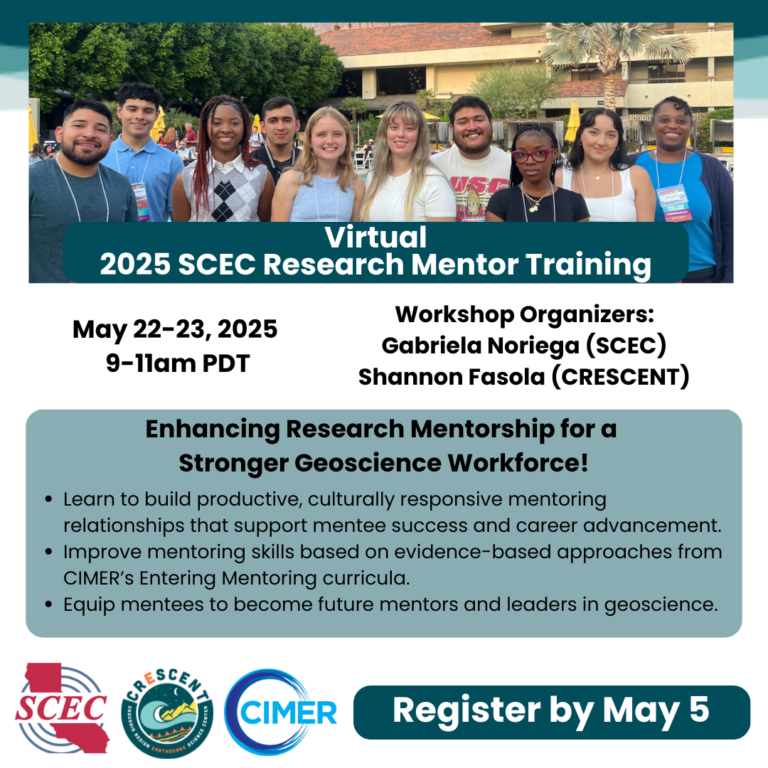
Advancing Research Excellence for Through Intentional Mentorship for a Stronger Geoscience Workforce!
Statewide California Earthquake Center – SCEC and CRESCENT are co-facilitating an interactive training designed to help mentors develop skills for engaging in productive, culturally responsive, research mentoring relationships– relationships that optimize the success of both mentors and mentees. This training is built on the evidence-based Entering Mentoring curriculum from the Center for the Improvement of Mentored Experience in Research (CIMER).
This workshop is open to researchers at all career stages who are interested in strengthening their mentoring skills.
Spring 2025 Mentor Training Read More »
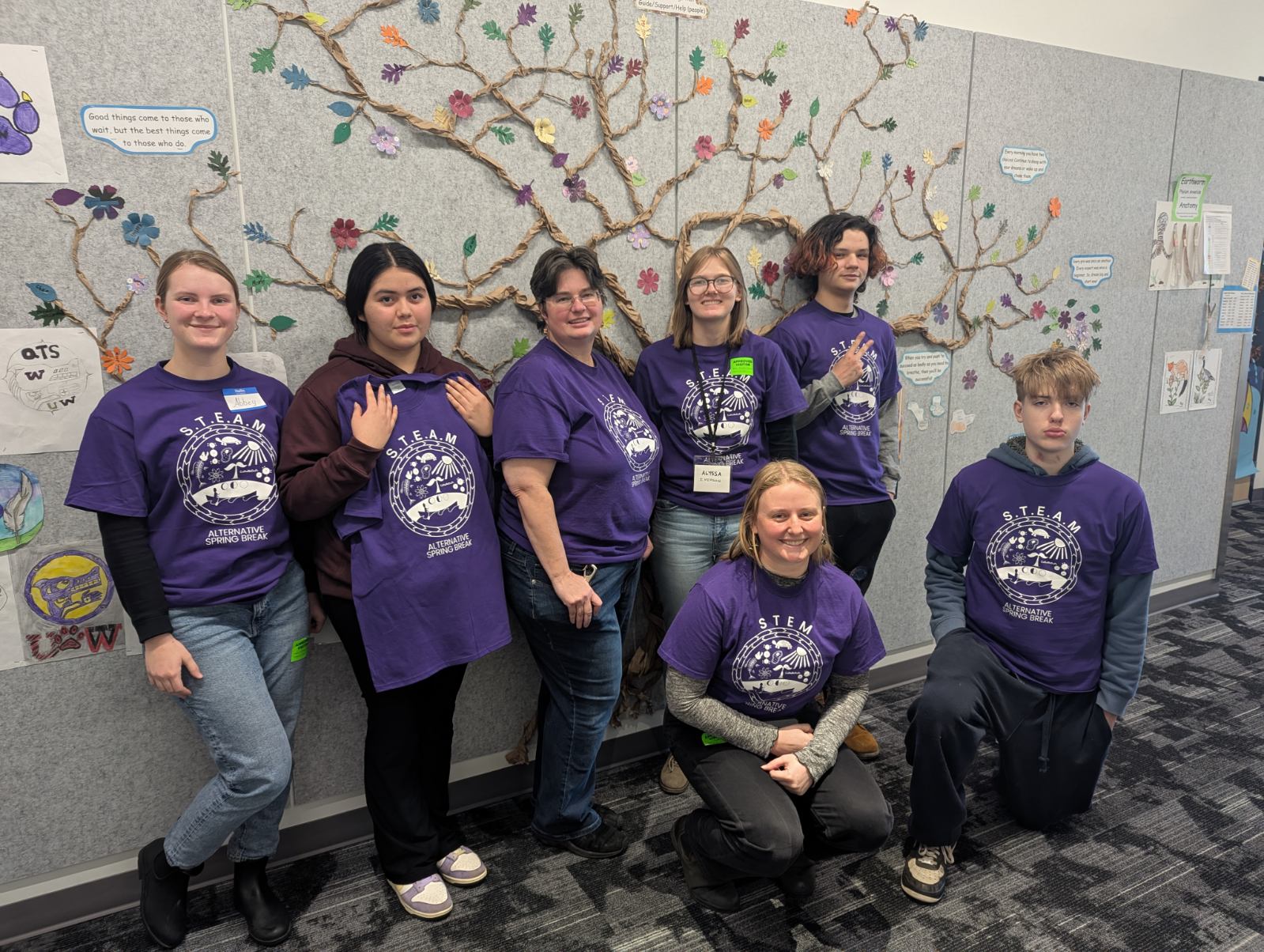
The team is mentoring four 9th-grade interns. Hear from one of the interns!
2. QTS Winter Site Visit Read More »
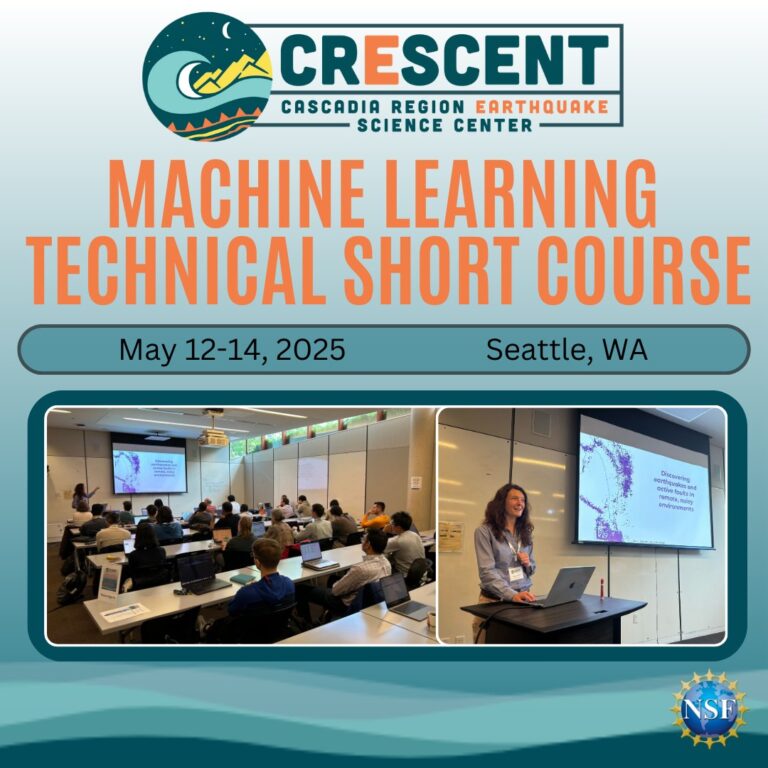
This three-day short course provides a hands-on introduction to machine learning techniques for seismic event analysis. Participants will learn to develop AI-aided earthquake catalogs through three key steps: event detection, association, and location with quality control. The course covers neural network architecture selection, model training, performance metrics, and application to continuous seismic data. The workshop will include a mix of presentations and hands-on tutorials. The final day will include a participant hack-a-thon in which students attempt to develop a machine learning based quality control workflow to apply to future generations of machine learning earthquake catalogs.
Machine Learning Technical Short Course Read More »
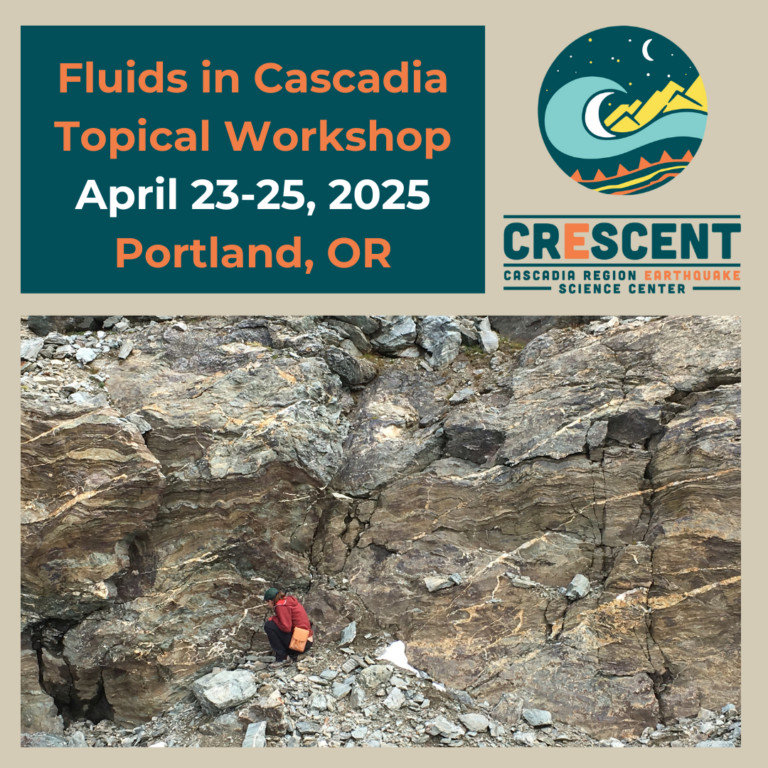
Fluids are ubiquitous in subduction zones and play a fundamental role in modulating many observed processes along the megathrust and other related faults, including slip behaviors and deformation mode. This cross-disciplinary workshop brings together geophysicists, geologists, geochemists, and modelers to discuss the role of fluids in Cascadia.
Fluids in Cascadia Topical Workshop Read More »
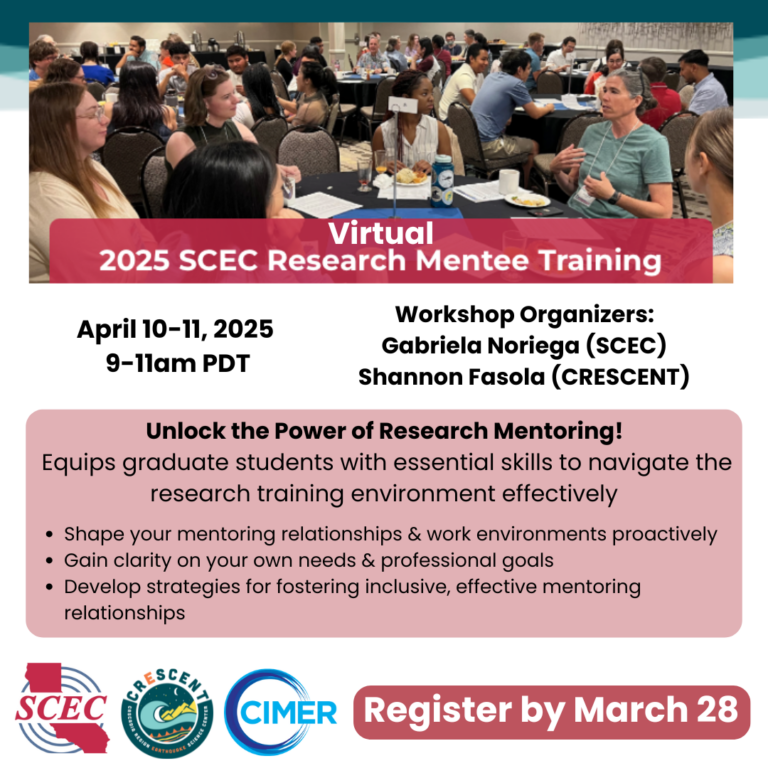
Graduate Students Unlock the Power of Research Mentoring!
Statewide California Earthquake Center – SCEC and CRESCENT are co-facilitating an interactive training to equip graduate students with essential skills to navigate the research training environment effectively. This training is built on the evidence-based Entering Mentoring curriculum from the Center for the Improvement of Mentored Experience in Research (CIMER).
Spring 2025 Mentee Training Read More »