Mentor Application

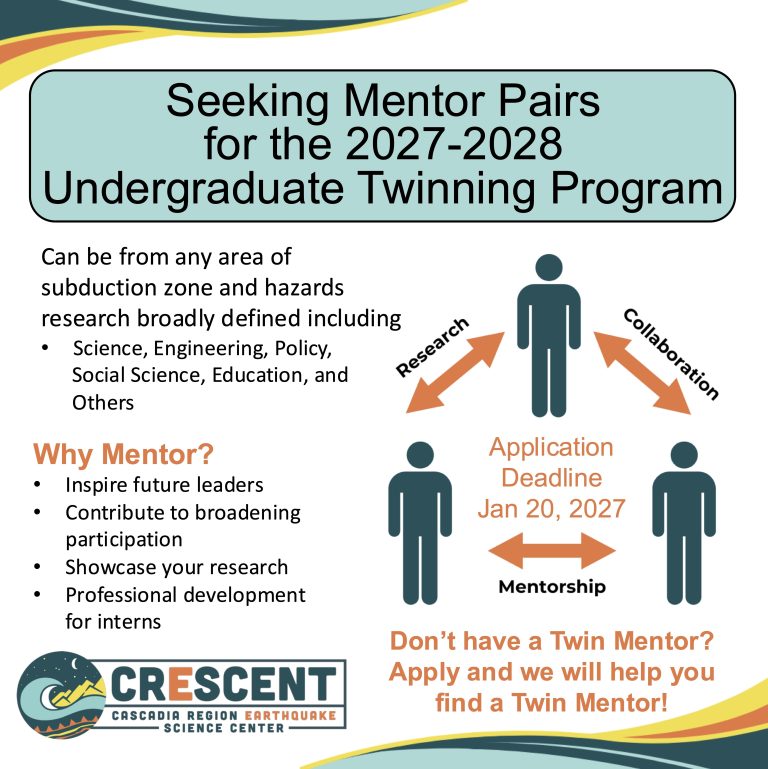
Now Accepting Mentor Applications for 2027-2028!
Mentor Application Read More »
Learn about the 2026-2027 Undergraduate Twinning interns and their projects!
2026 Twinning Participants Read More »
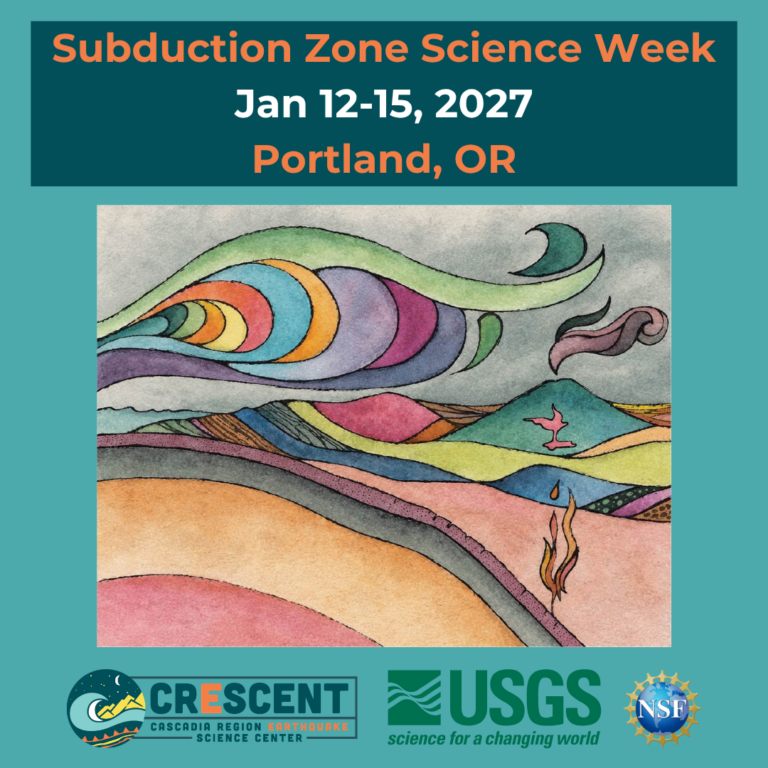
January 12-15, 2027
Subduction Zone Science Week will convene the nation’s leading subduction zone researchers, federal scientists, engineers, and community partners to integrate global and Cascadia-focused knowledge across earthquakes, tsunamis, volcanoes, landslides, and cascading hazards.
Subduction Zone Science Week is co-organized by the USGS and CRESCENT to focus broadly on the subduction zone natural hazards and community resilience. The goals are to:
– Foster collaboration between subduction zone and multi hazard researchers;
– Bridge gaps, and increase communication among subduction zone research groups; and
– Identify and encourage synergistic collaborative activities in U.S. and global subduction zones.
Subduction Zone Science Week 2027 Read More »
Cores to Code (C2C) is a three-week summer learning experience that gives undergraduate students hands-on experience exploring Cascadia’s earthquake and tsunami history through fieldwork, laboratory research, and computational modeling. The program helps build the next generation of geoscientists while creating pathways into earthquake and coastal hazard science
Apply by Feb 15, 2027.
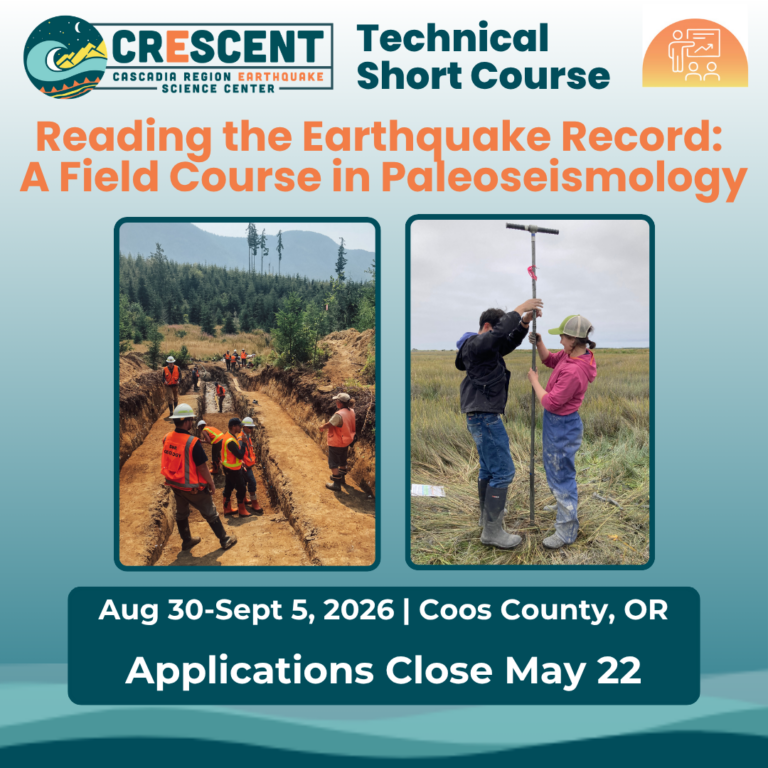
Led by members of the Cascadia Paleoseismology (CPAL) and Community Fault Model (CFM) working groups, this five-day, field-based technical short course exposes participants to paleoearthquake studies and their application to understanding fault behavior in space and time. Integrated topics include subsidence stratigraphy, ecology-based paleoseismic studies, tsunami deposit mapping, trench-based paleoseismology, high-resolution lidar topography, and surficial geologic mapping. Based at the Oregon Institute of Marine Biology in Charleston, the course includes limited classroom time and 4.5 days of fieldwork in the marshes and adjacent uplands of Coos Bay on Oregon’s southern coast.
Application closes May 22, 2026.
Paleoseismology Technical Short Course Read More »
Led by members of the Coupling, Seismicity, and Slow Slip (C3S) working group, this technical short course provides requisite tools for recognizing how earthquake cycle signatures in the Cascadia Subduction Zone are expressed in geodetic observations. It will introduce basic processing of geodetic time series to interpret longer-term strain accumulation processes and slow slip events.
Applications are closed.
Geodesy Technical Short Course Read More »
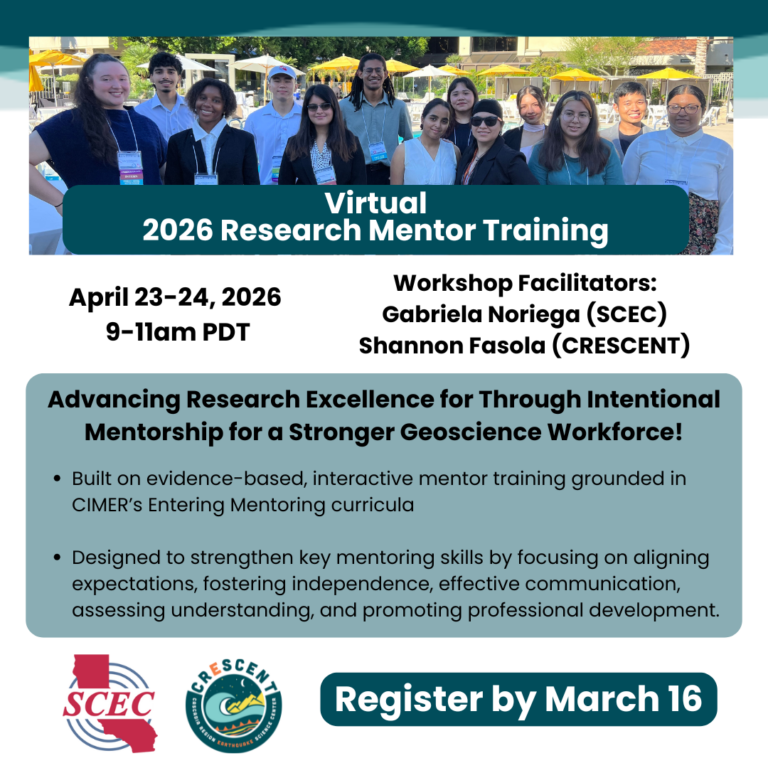
Advancing Research Excellence for Through Intentional Mentorship for a Stronger Geoscience Workforce!
Statewide California Earthquake Center – SCEC and CRESCENT are co-facilitating an interactive training designed to help mentors develop skills for engaging in productive, culturally responsive, research mentoring relationships– relationships that optimize the success of both mentors and mentees. This training is built on the evidence-based Entering Mentoring curriculum from the Center for the Improvement of Mentored Experience in Research (CIMER).
This workshop is open to researchers at all career stages who are interested in strengthening their mentoring skills.
Spring 2026 Mentor Training Read More »
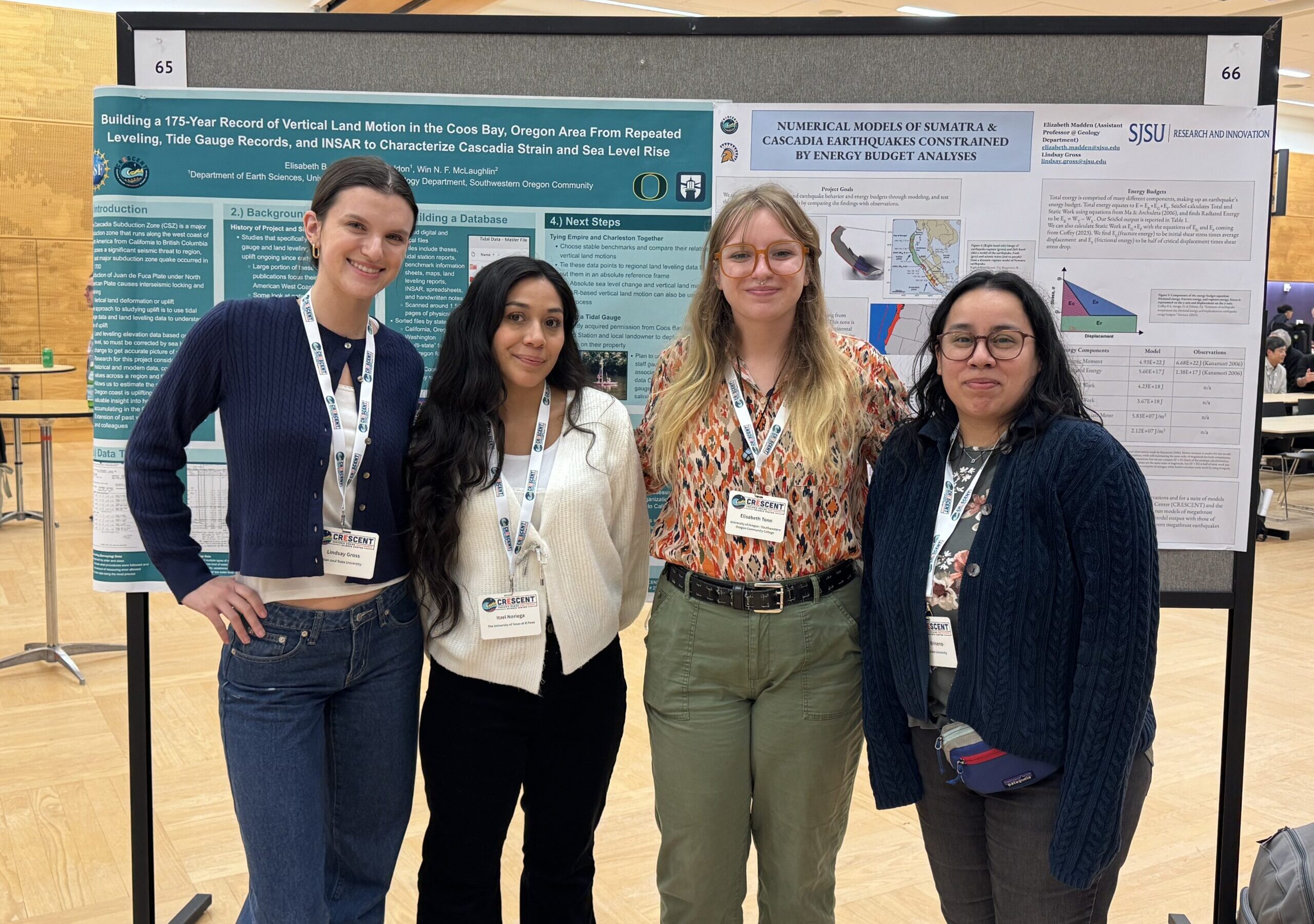
From Curiosity to Contribution: Students Thrive in CRESCENT’s Year-Long Geoscience Mentorship Program
2025 Twinning Story Read More »
Learn about the 2025-2026 Undergraduate Twinning interns and their projects!
2025 Twinning Participants Read More »

What can you do with a geoscience degree?
Join the EarthScope Consortium-opterated NSF National Geophysical Facility and CRESCENT for a Geoscience Career Panel webinar showcasing diverse career paths across academia, industry, government, nonprofit, consulting, and beyond.
Full Recording Available.
Fall 2025 Career Panel Read More »