
Makah CASE
STEM Alternative Spring Break at Neah Bay High School
March 23 – 27, 2026
Blog post written by Anna Frank and Julia Grossman
We were so excited to be back at Neah Bay for a second time! After spending months preparing for spring break, we finally loaded up our car in Seattle, crossed Puget Sound on the ferry, and continued driving until we reached Neah Bay, Washington.
SCIENCE
Teach Earth Science to high schoolers
It was Earth Science and Geohazards week for our students at Neah Bay HS!
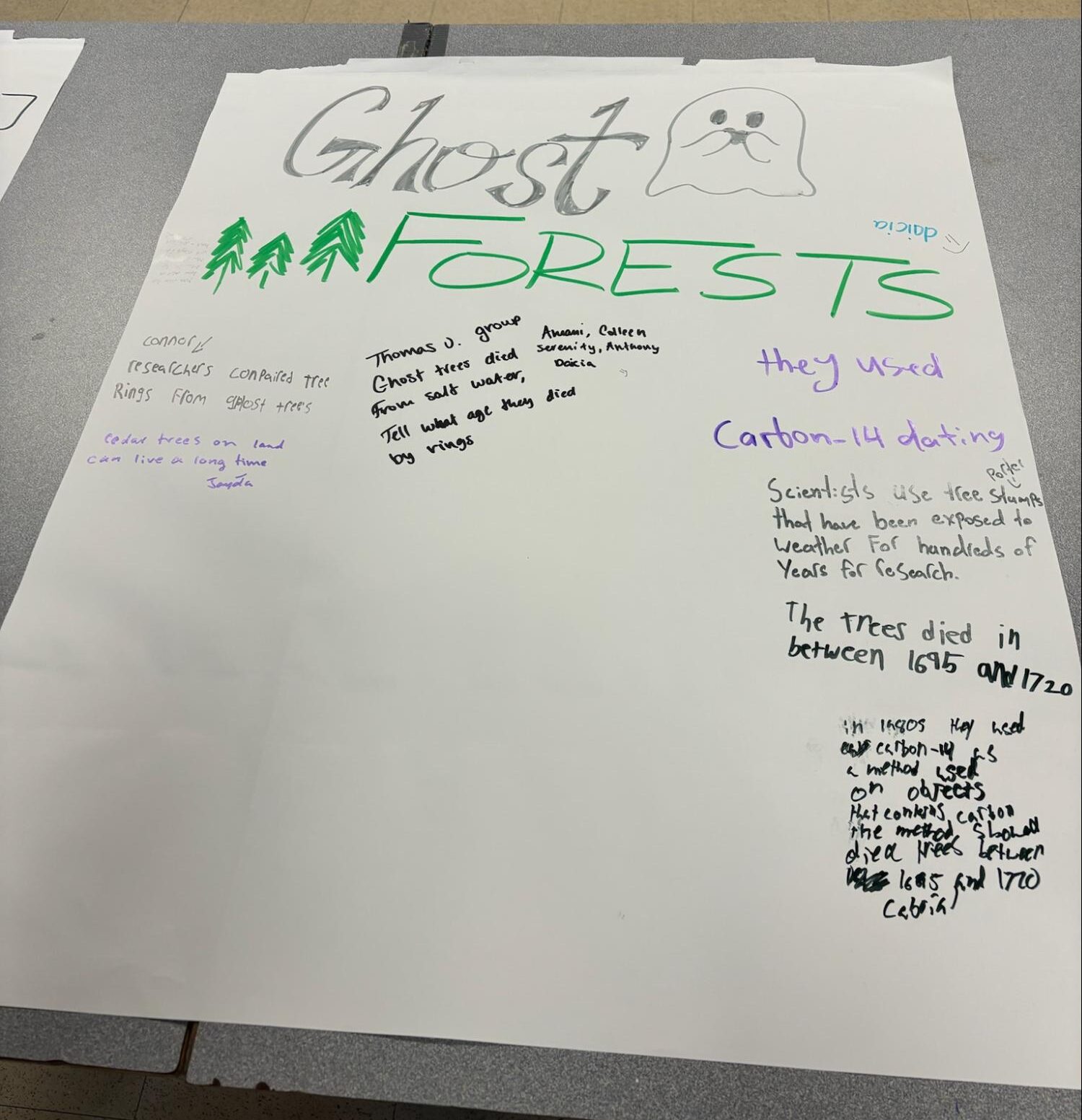
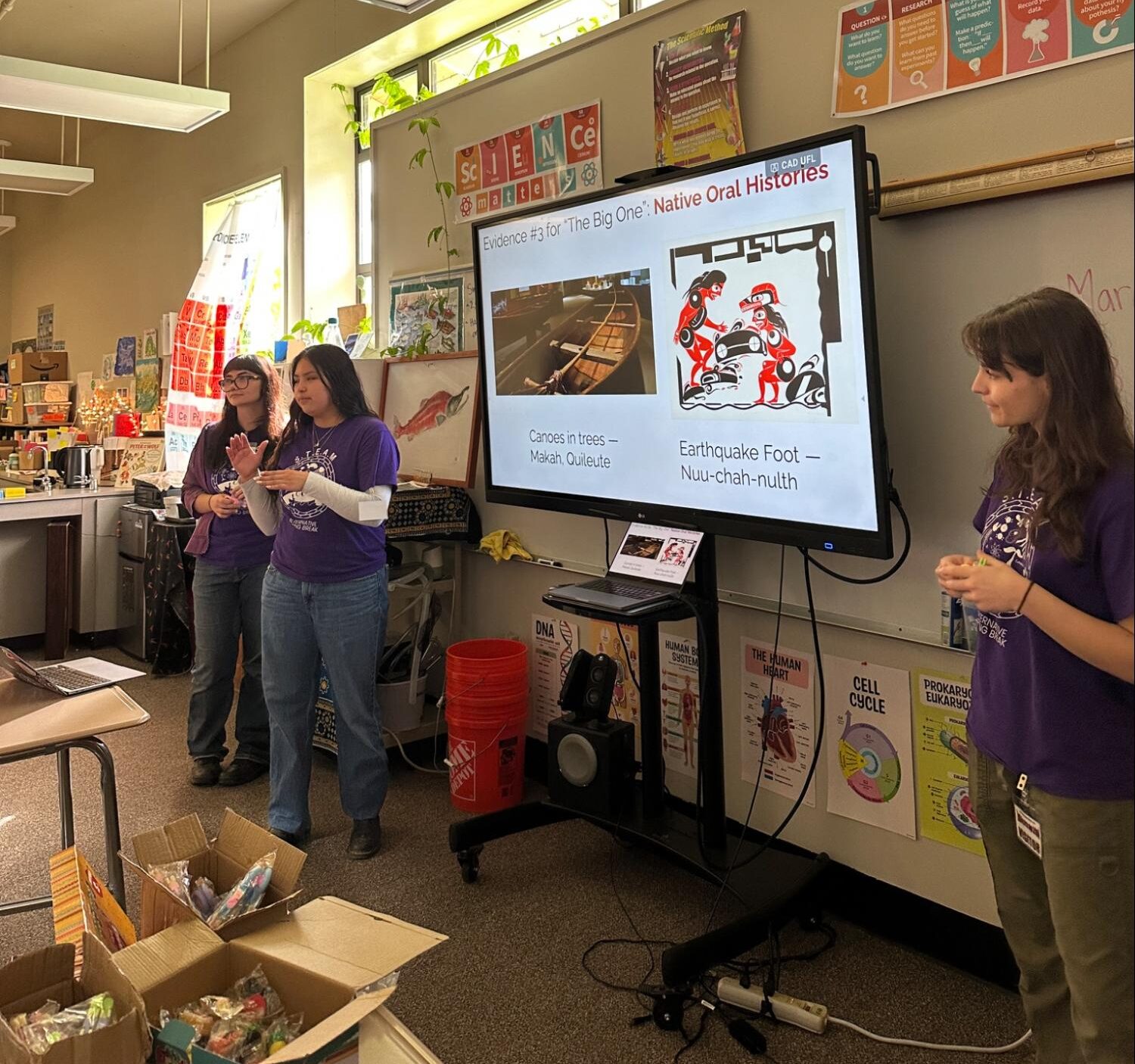
On Day 1, we taught about earthquakes. Students asked (and then answered) questions about why earthquakes happen here, how big they can be, and how do we really know any of this, since no one alive today has felt a big Pacific Northwest earthquake? They explored 4 main pieces of earthquake evidence found here in the Pacific Northwest: tsunami deposits, ghost forests, Native oral histories, and Japanese records.
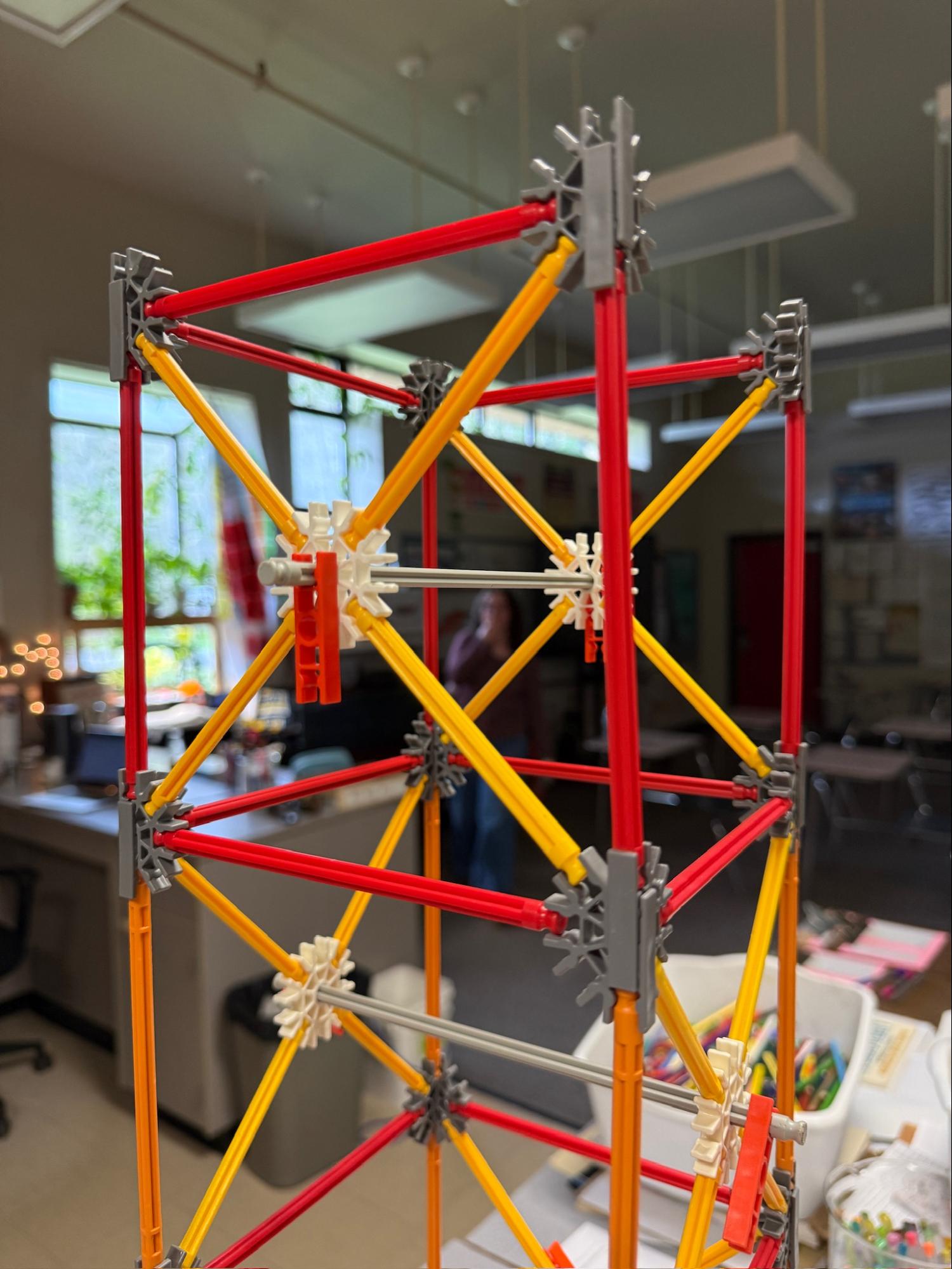
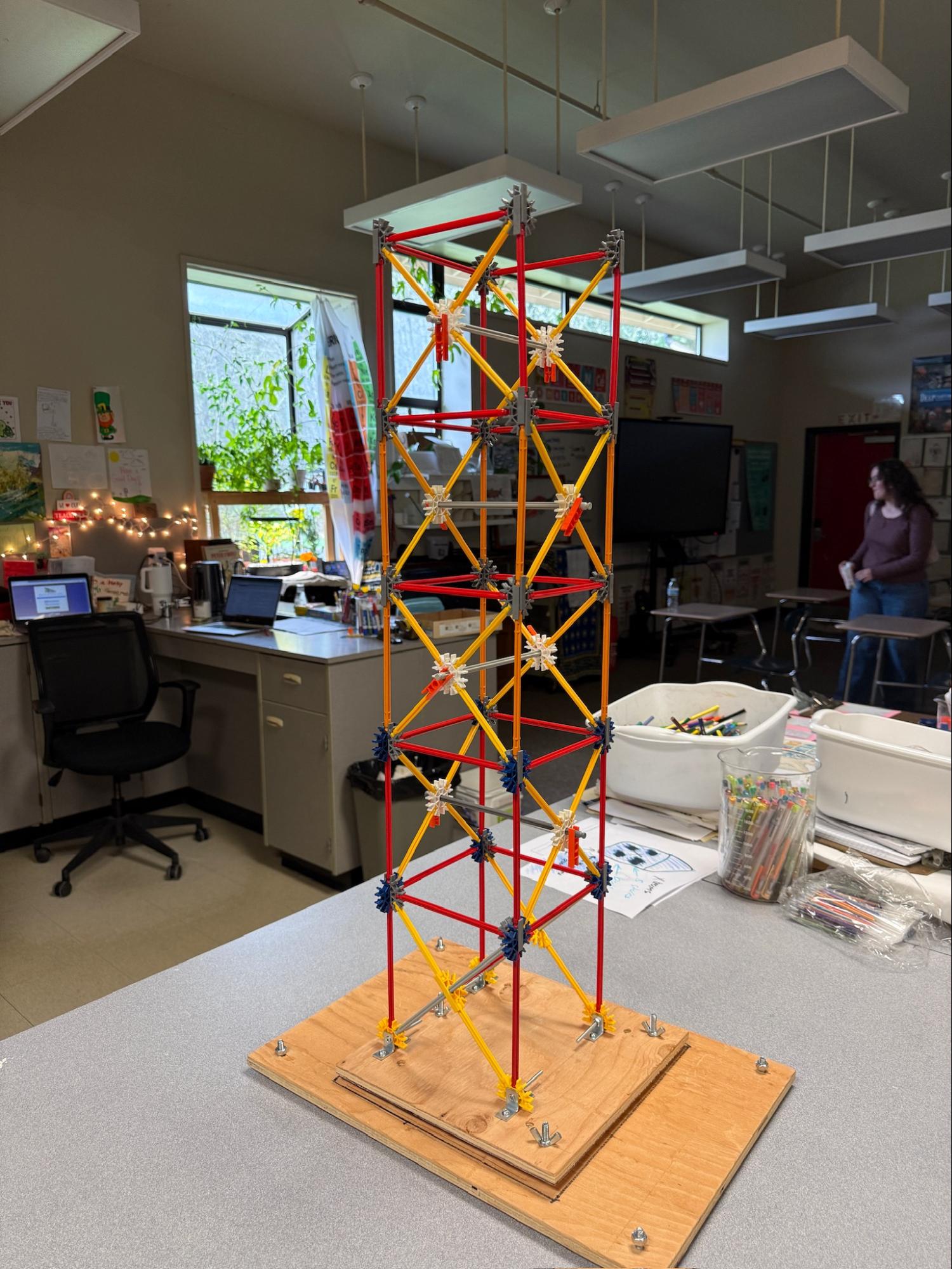
On Day 2, we thought more about earthquake shaking and how we can engineer buildings to withstand it. After a brief lesson about buildings and earthquake waves (using an analogy comparing buildings to boats, and seismic waves to ocean waves), students spent most of the class engineering their own buildings! We then put their buildings to the test on our automated shake table and saw which buildings withstood our simulated earthquake shaking. Our students (and their buildings) did great, and employed a lot of the engineering strategies they had just learned!
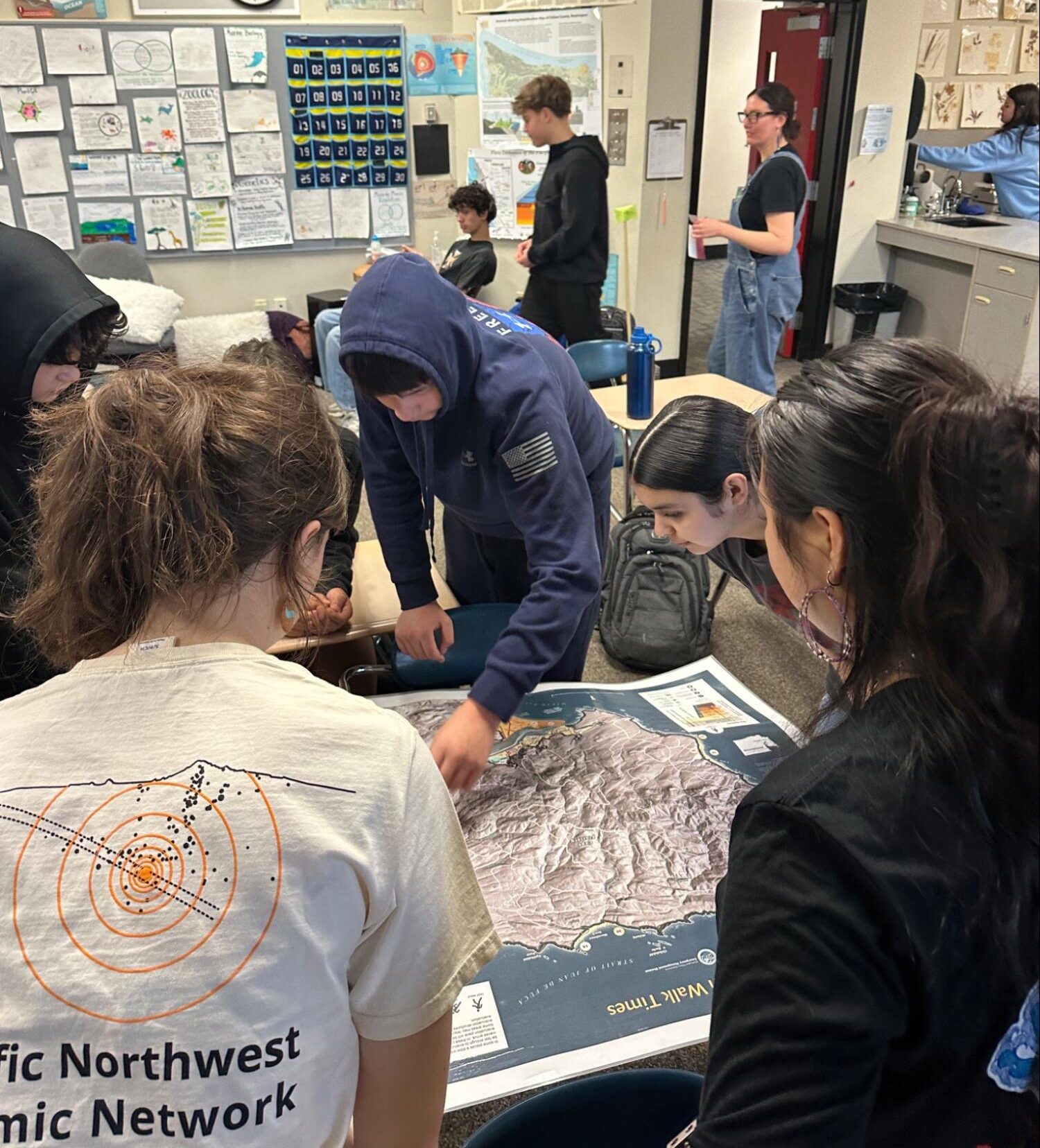
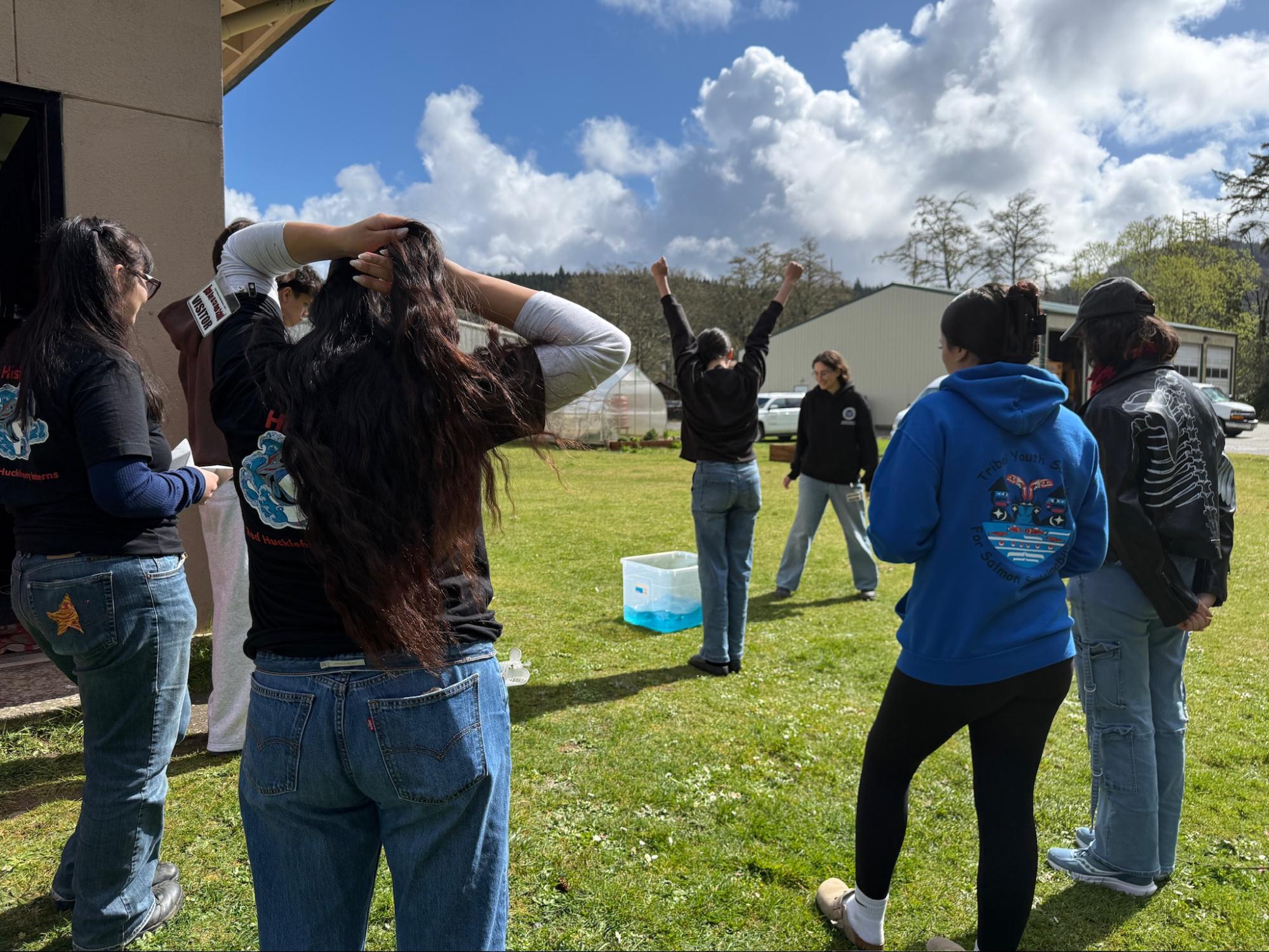
On Day 3, we talked about secondary hazards of earthquakes. These are additional hazards that earthquakes can trigger, such as landslides and tsunamis. Landslides are prevalent here by Neah Bay, and we had students think about landslide prevention techniques employed in their community. Students also examined tsunami walk time maps, which show how long it would take for them to walk out of the tsunami inundation zone in Neah Bay. Then, we created our own tsunami wave tank outside! Students compared ocean wind waves to tsunami waves, and even created their own tsunamis in our wave tank.
The plan for Day 4 got a bit shaken up when the power went out in the morning! We showed up to school early, and waited alongside students to find out if they were going to cancel school for a “power outage day.” Eventually, school was canceled, so we didn’t get to go on our field trip to the Makah Cultural and Research Center. Hopefully the students will still be able to go sometime in the spring and learn how geohazards and culture intersected when archaeologists uncovered thousands of Makah artifacts that had been buried and preserved in a landslide hundreds of years ago. As for our free day — we hiked to Shi Shi beach and ate dinner at Warmhouse Restaurant in town!
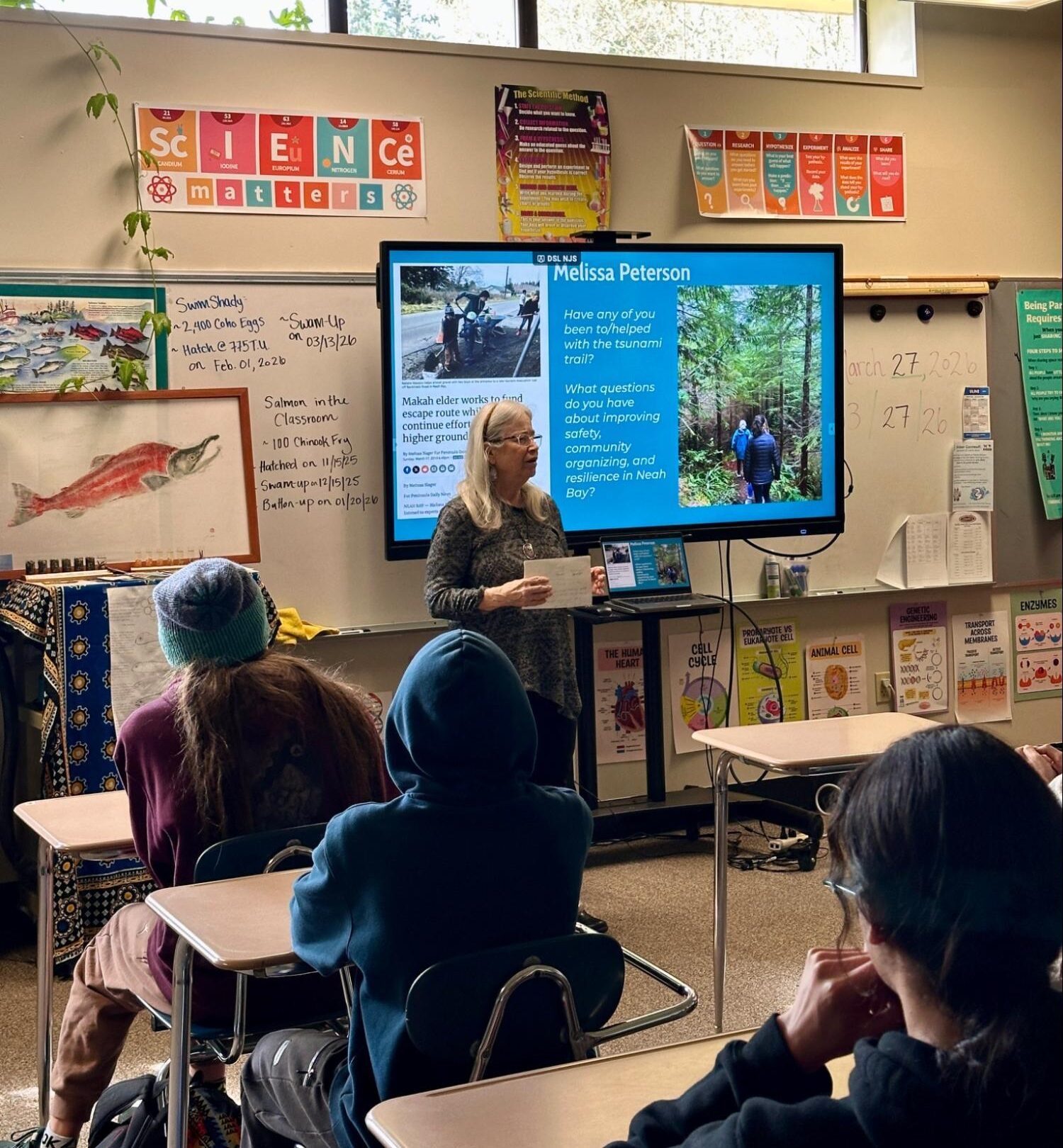
Day 5 was our last day, and we were not ready to leave! But we still had a fantastic time during our Earth Science Careers & Wrap-Up Day. Elder Melissa Peterson shared her background and knowledge of earthquakes with the students, and provided a wonderful message of hope for the future. We also had lots of students (our team!) and career professionals (Randy LeVeque, Loyce Adams, and Shannon Fasola) talk about their jobs in earth science, and how our ultimate career goal is to help keep people safe from geohazards.
Share about our experience as UW students
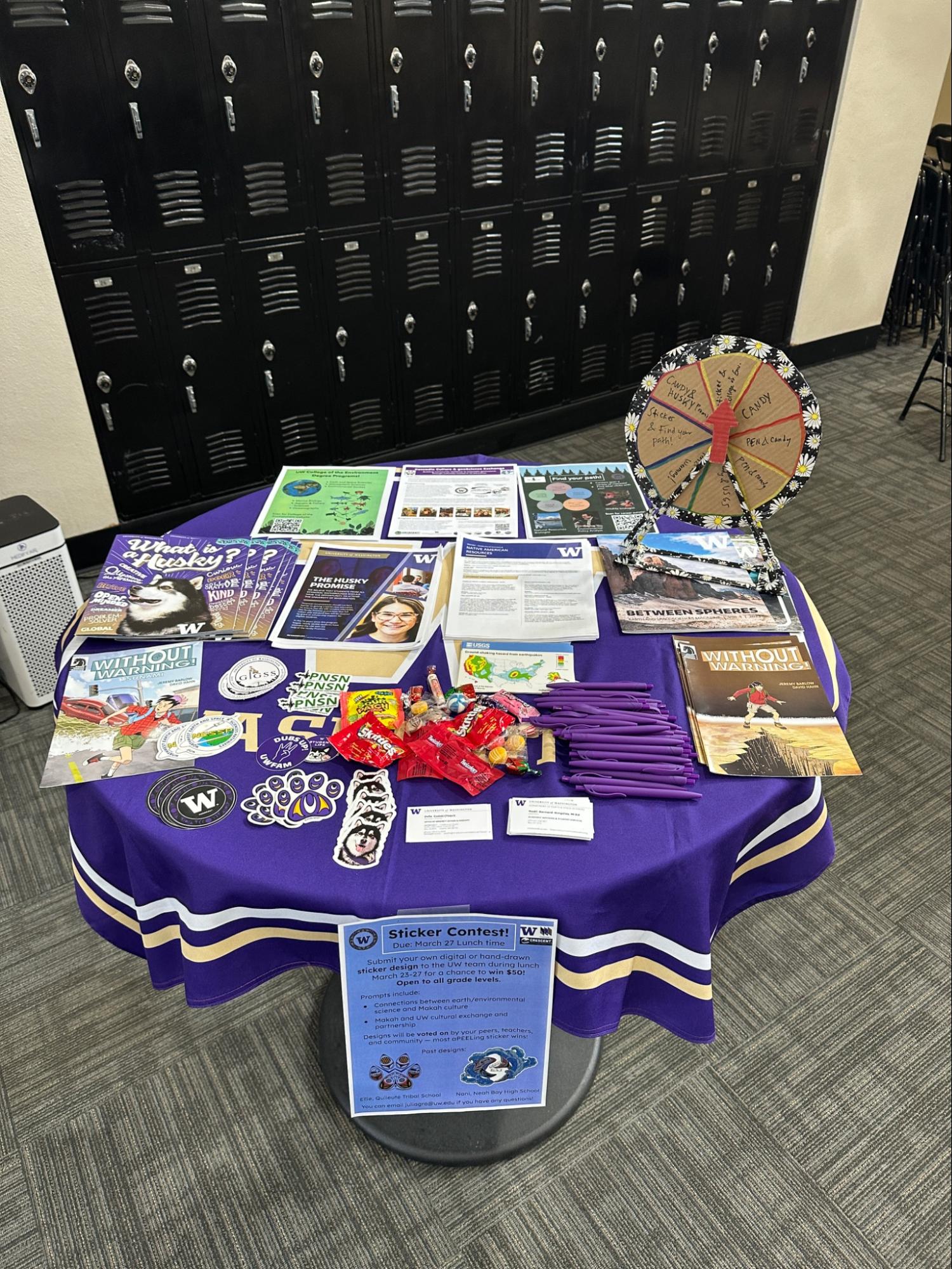
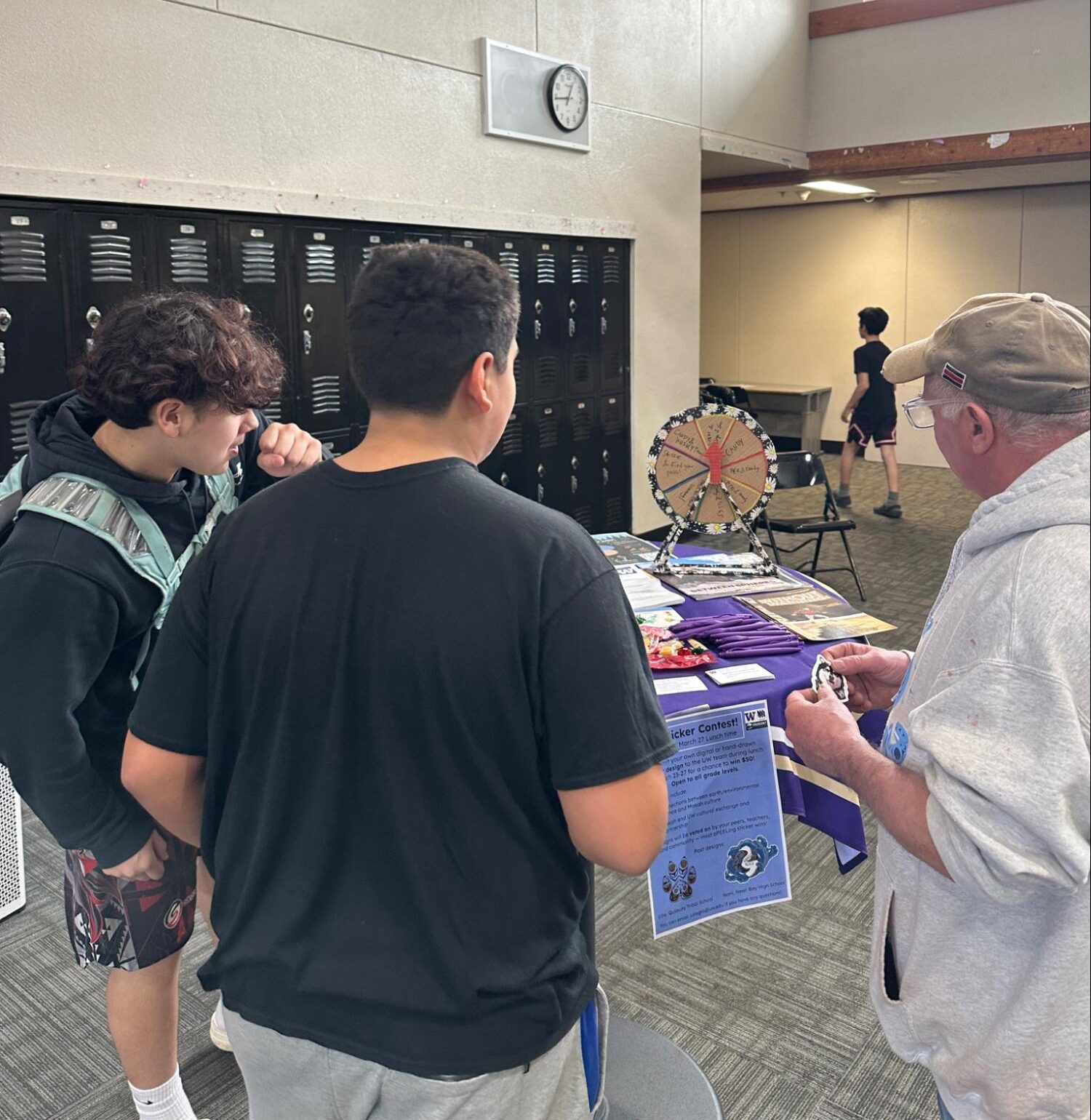
Every day during lunch period, we set up our UW/College Table! We talked with both middle and high school students about what it’s like to be college students and students at UW specifically. We had an awesome prize wheel that students could spin and win a handout + a prize. We also had great flyers for the options within UW’s college of the environment and general environmental career opportunities geared toward Native students. And of course, we had lots of stickers and candy to give out!
Mentor high school students interested in college
Another important part of spring break was getting to meet with our team of student interns! Tim, Jessie and Krow all applied to be on our team. We discussed possible options for projects they can do during the spring. We’re excited to see what they come up with and to continue working with them!
CULTURE
Teach indigenous languages
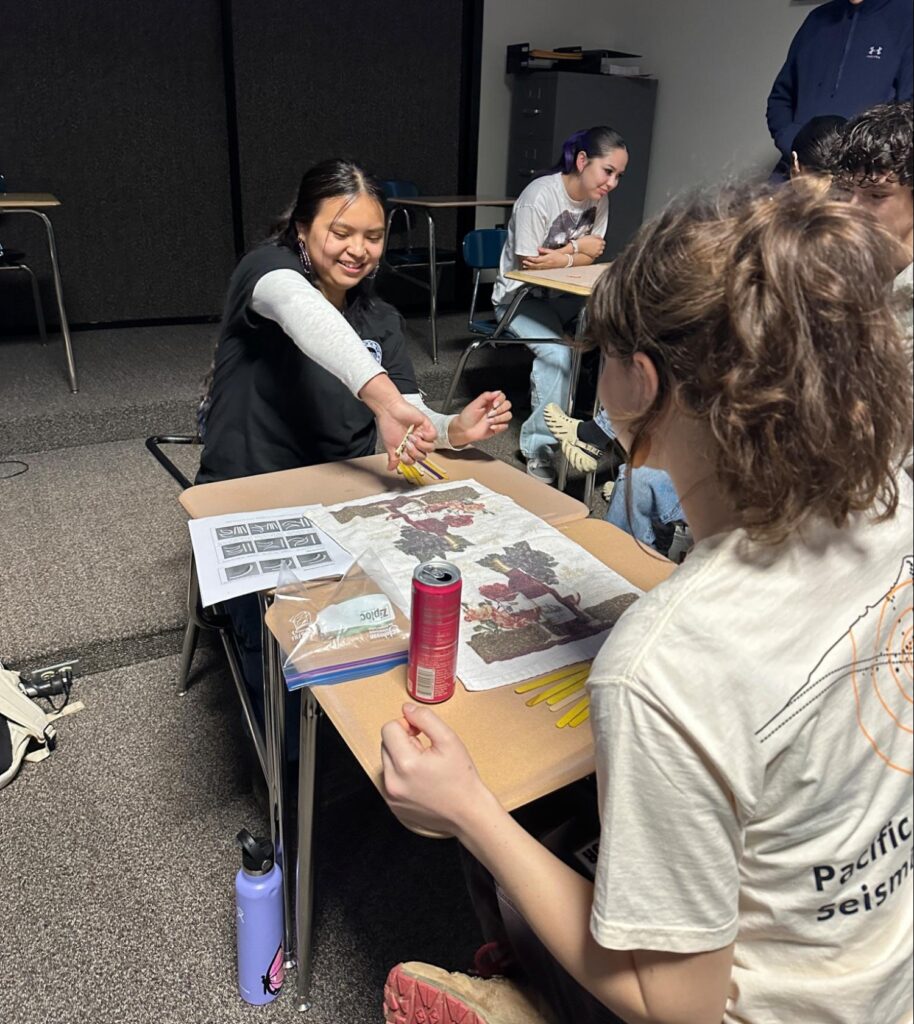
We had the opportunity to attend multiple classes with Hazel, a language and culture teacher at Neah Bay, where she and her students helped guide and support our learning. Hazel invited us to join her Makah 1 language and culture class, where we stepped into the role of “students” alongside a group we later taught in the afternoon. During the week — which also happened to be the week of March Madness — we played a traditional game ʔe·ʔis. Instead of just learning vocabulary, we practiced by playing the game, speaking the points out loud, and identifying the role of the beaver teeth we rolled. Each player took turns rolling beaver teeth with different markings on each side, and points were earned based on the combinations that appeared, but players could only collect those points if they were spoken in Makah. Hazel also set up a March Madness–inspired bracket for our class, which followed a double-elimination style.
Throughout these classes, we continued to learn more Makah vocabulary words through the game traditional game ʔe·ʔis, as well as Earth Science-related terms like taqi· (earthquakes), bu·ɫap (tsunamis), q̓ʷiƛ̓as (landslides). We continued to practice and reinforce these words by keeping them in our PowerPoint slides!
Participate in cultural activities (music, dance, art)
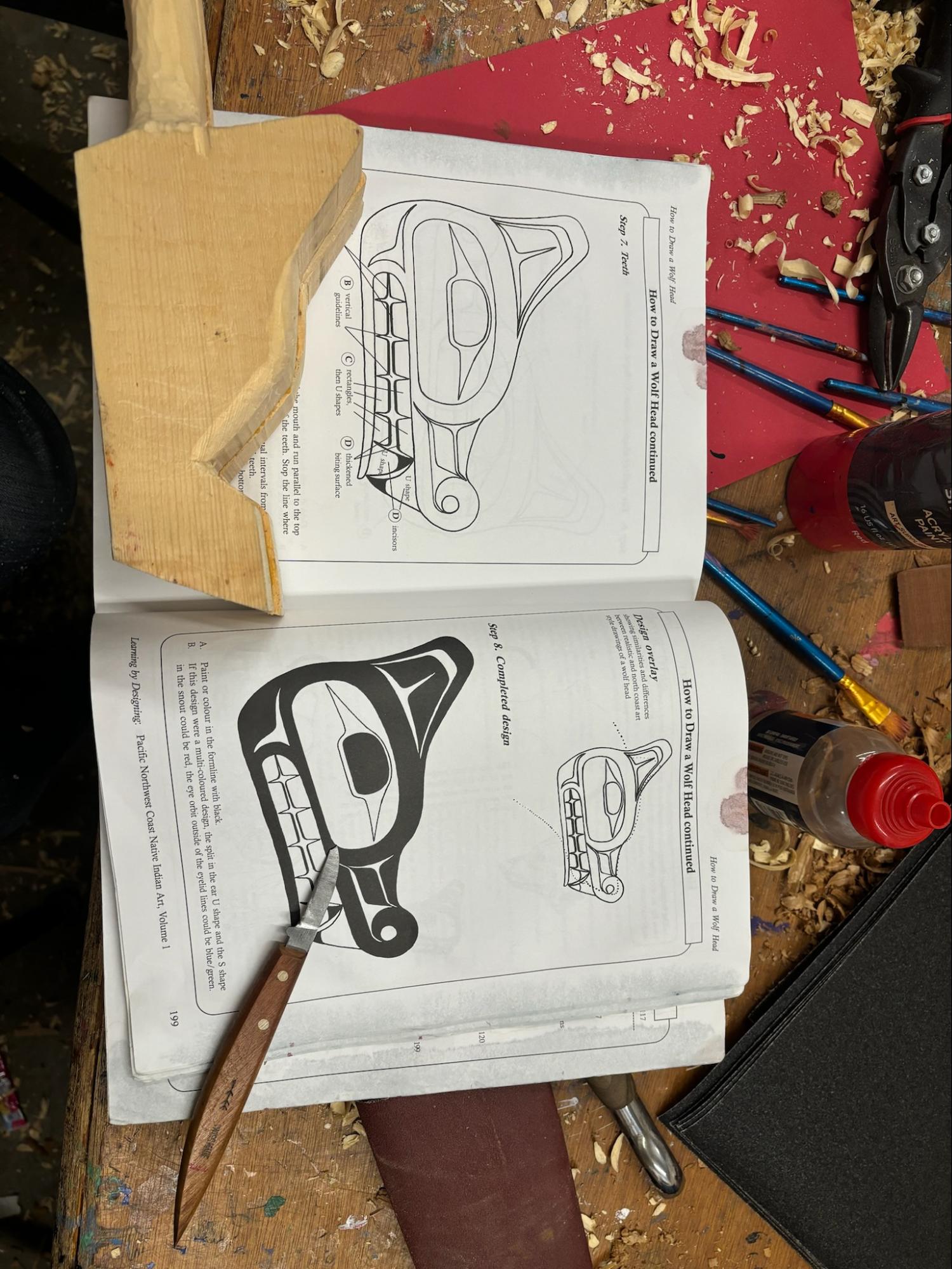
We got to Paco in his class again, and our team had a great time working alongside him in woodshop. During this visit, our focus was on creating rattles, and each member of our team designed and made their own in different styles! While we were there, we also had the opportunity to see students’ work on both their rattles and paddles, which gave us inspiration and insight into their process. To make our rattles, we first sketched a design, then had a piece of wood cut in the shape of our design. From there, we began carving out the inside of the rattle, where BBs would later be added and adjusted to create the desired sound. Once the inside was carved out, the two halves were clamped together, and we began sanding the outside to shape and smooth it. Next, we will draw and paint a design. Throughout the process, we also asked students for techniques and tips, learning directly from their experience and skills.
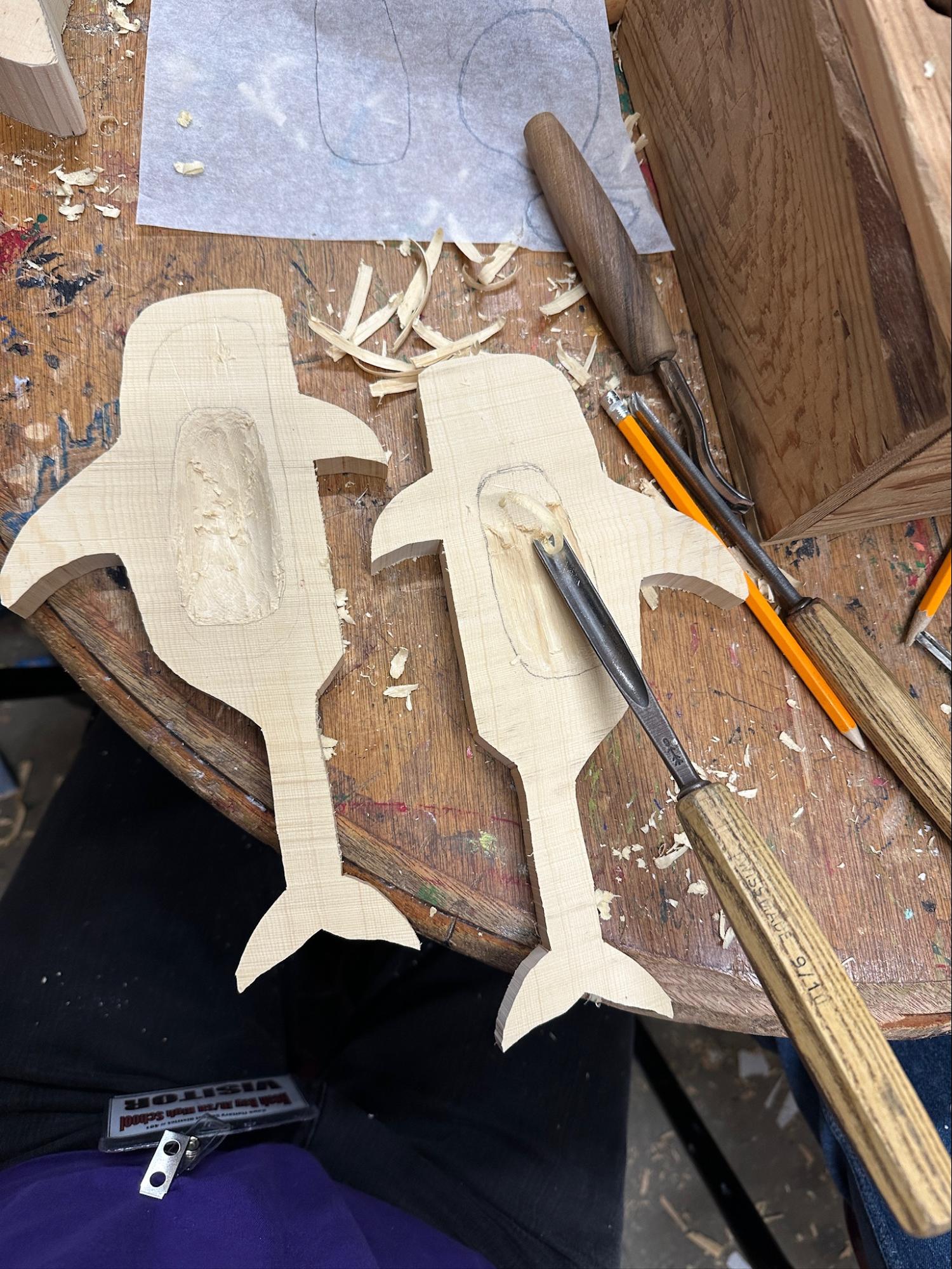
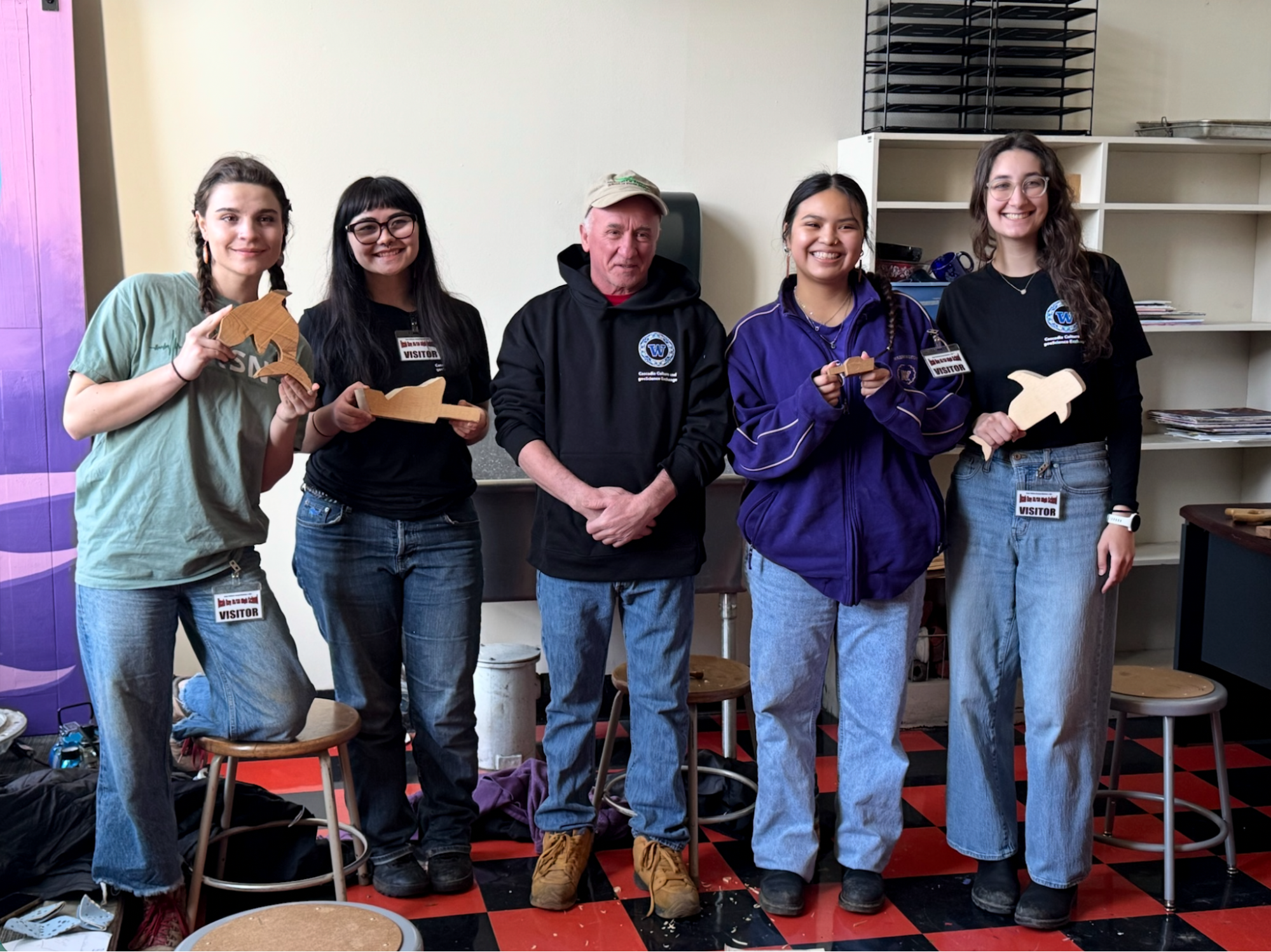
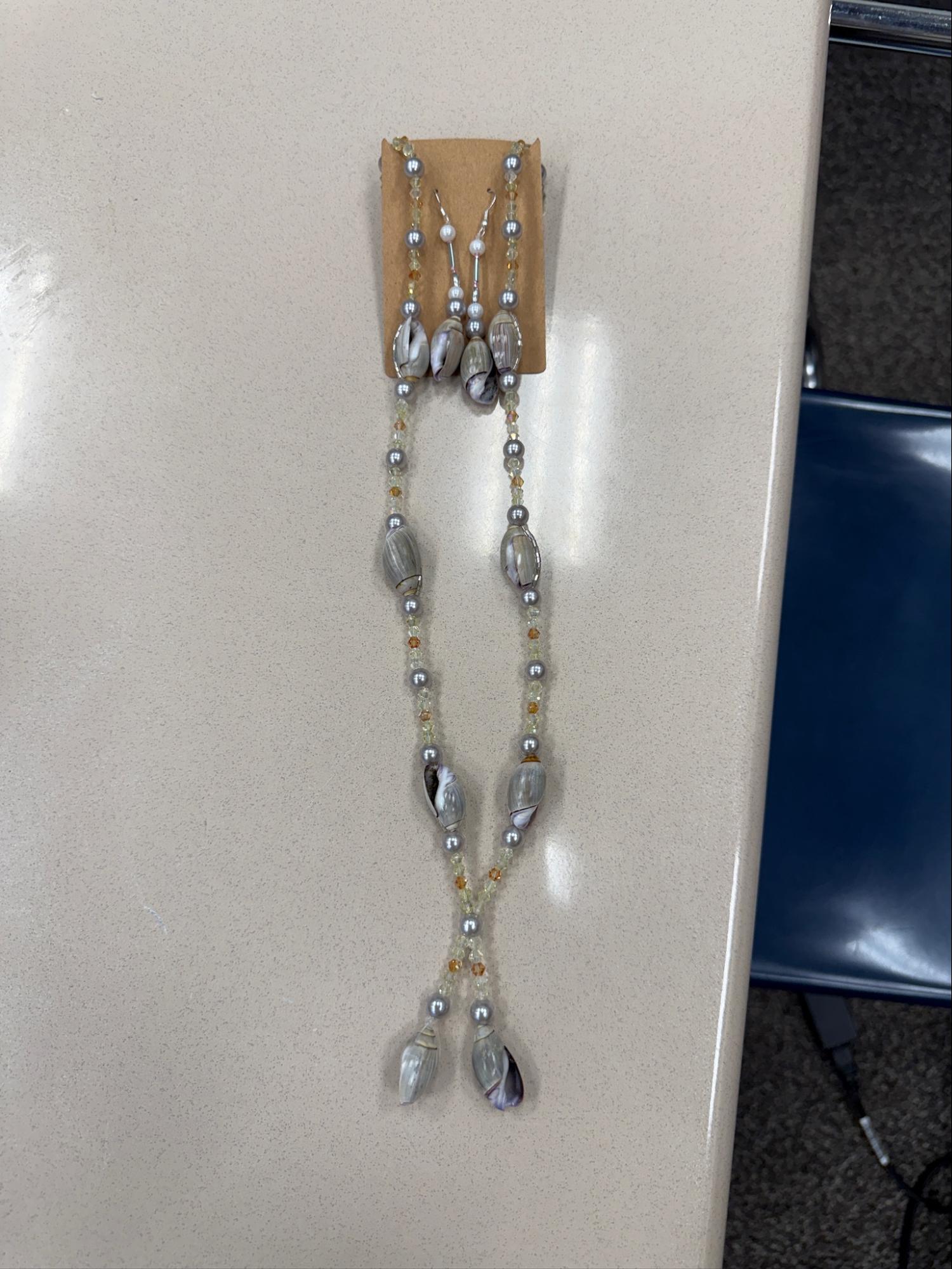
We were also invited to participate in a new class offered by Hazel called the regalia-making class, where students work on creating regalia pieces. Students have been making items intended for a giveaway ceremony, while also learning the meaning and significance behind each part of regalia. In this class, Hazel had her students act as our teachers. We were paired up and each guided by a student, who showed us how to string materials such as olive shells, dentalium, and beads into necklaces and earrings! We had to prepare the olive shells by filing them down so there was a hole that we could put our string through. Then, we designed and strung our bead and shell patterns, finishing with dangling pieces at the end. It is custom to give away the first piece you create as a gift, and you’re supposed to be in a good, peaceful state when making it, imbuing the regalia with only good emotions.
Share traditional knowledge, stories, and food
We also participated in several meaningful experiences connected to learning about local culture, ecology, and history.
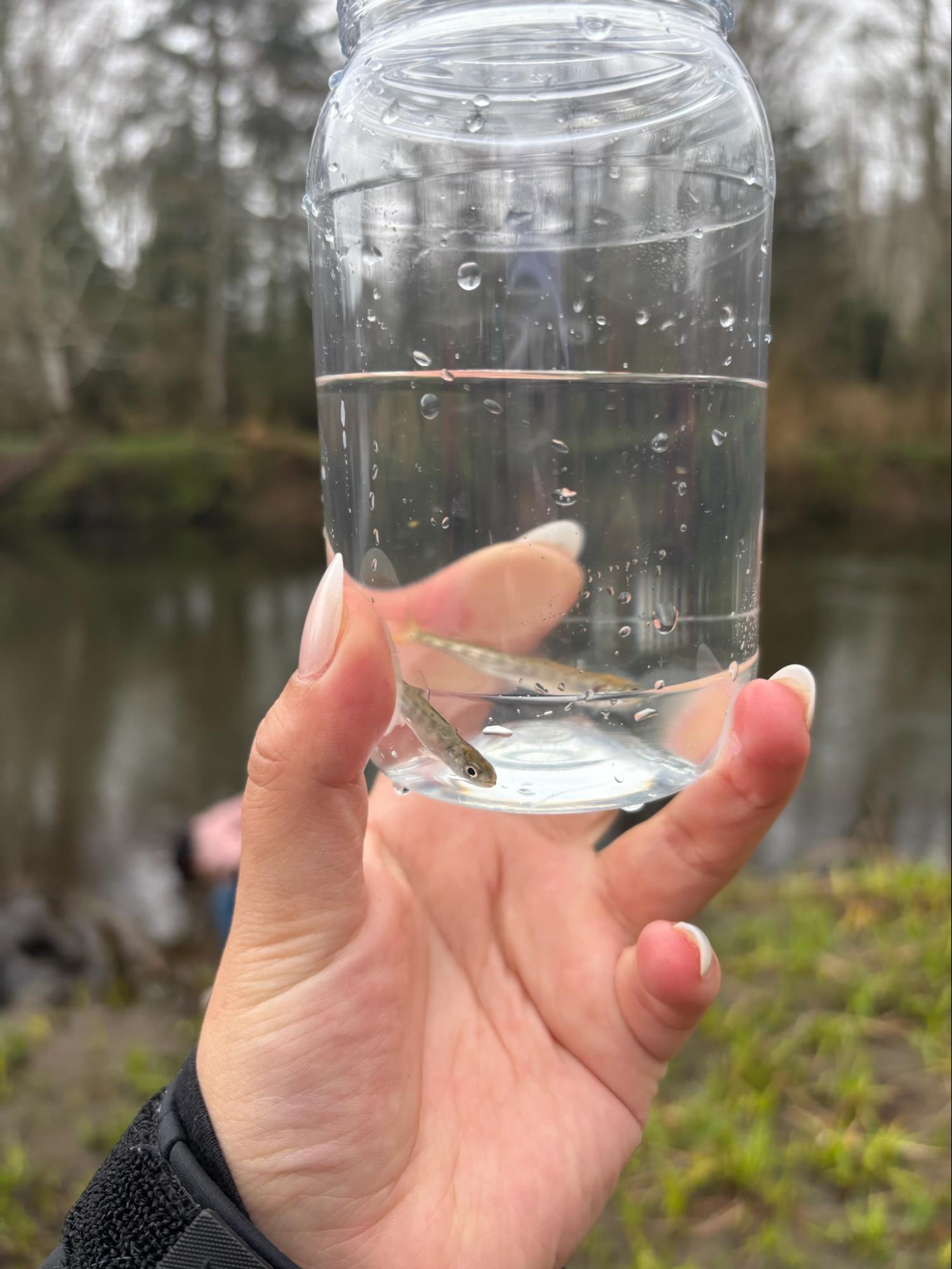
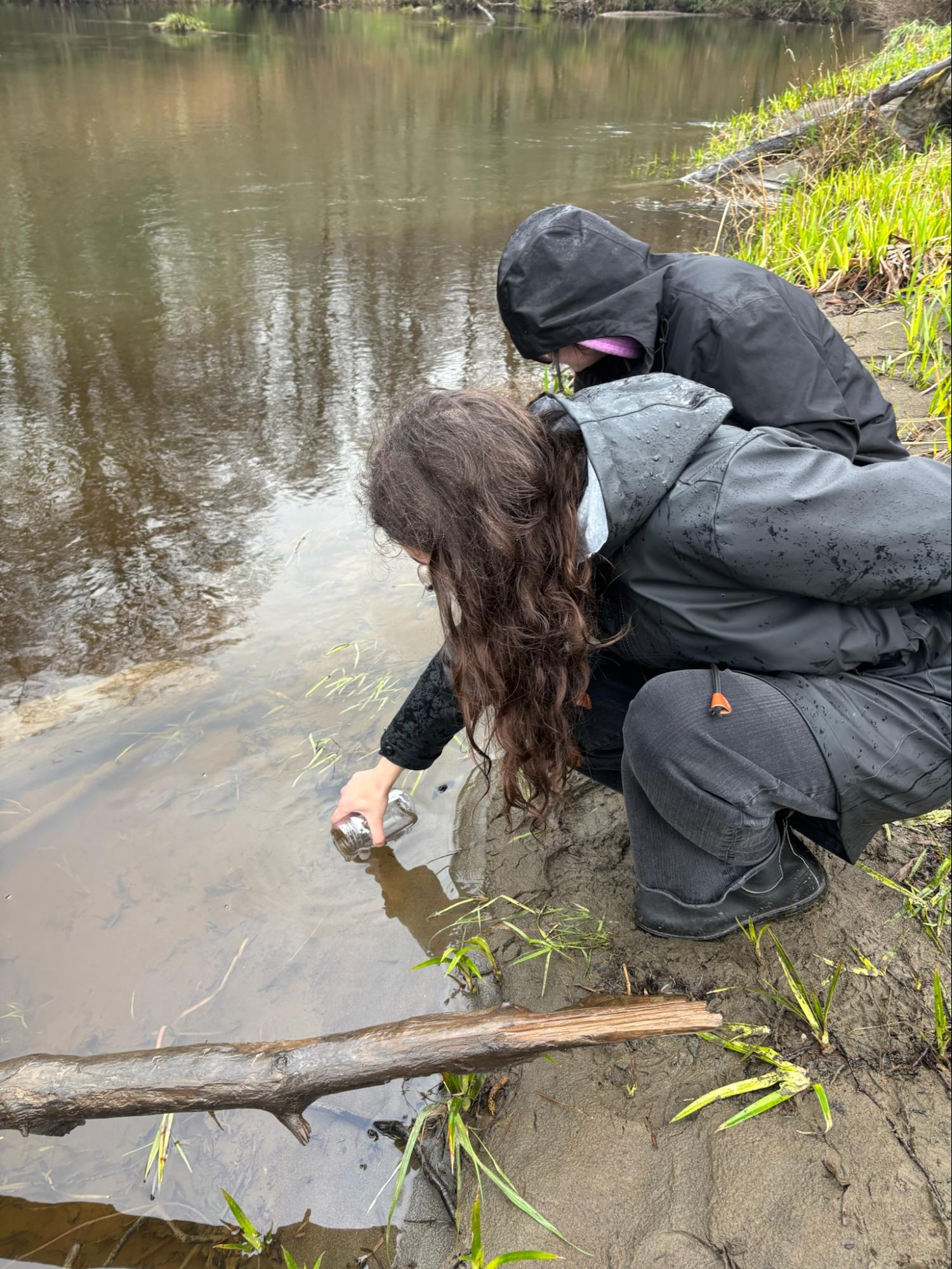
We took part in Holly’s salmon release, where students and our team went out to the Makah National Fish Hatchery to release chinook salmon that the students had hatched at the high school. We were able to see the salmon fry that students had helped raise, and we learned about the full process of growing salmon from eggs to fry stage before release. It gave us a better understanding of the care and responsibility that goes into supporting their life cycle.
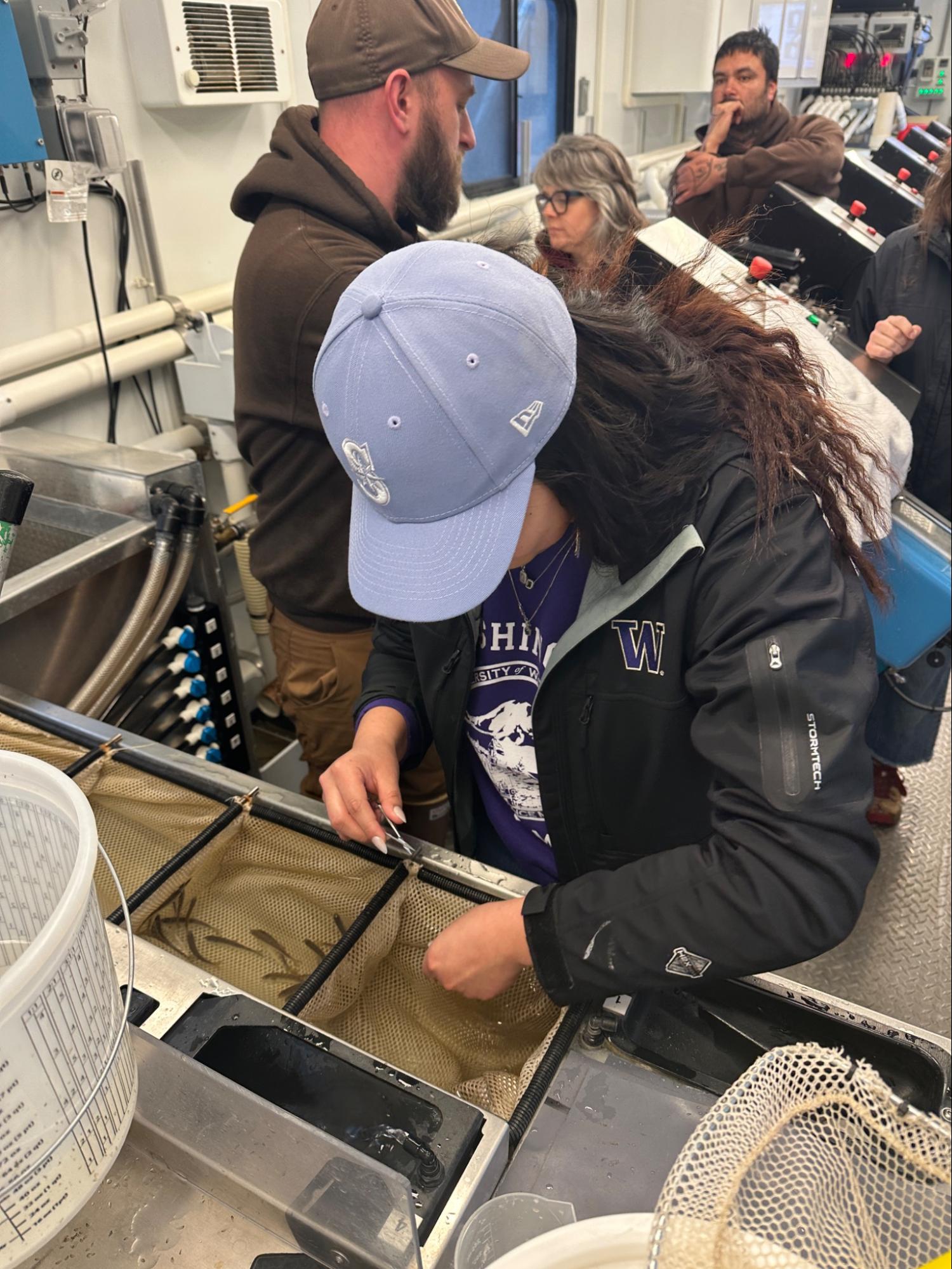
After the salmon release, we received a tour of the hatchery and learned more about the work that goes into raising salmon at all stages of their life cycle. We also learned about Bacterial Kidney Disease and how reducing handling helps minimize stress on the fish. The staff explained the techniques used in fertilizing eggs and the significant effort it took to establish and maintain a hatchery in the area.
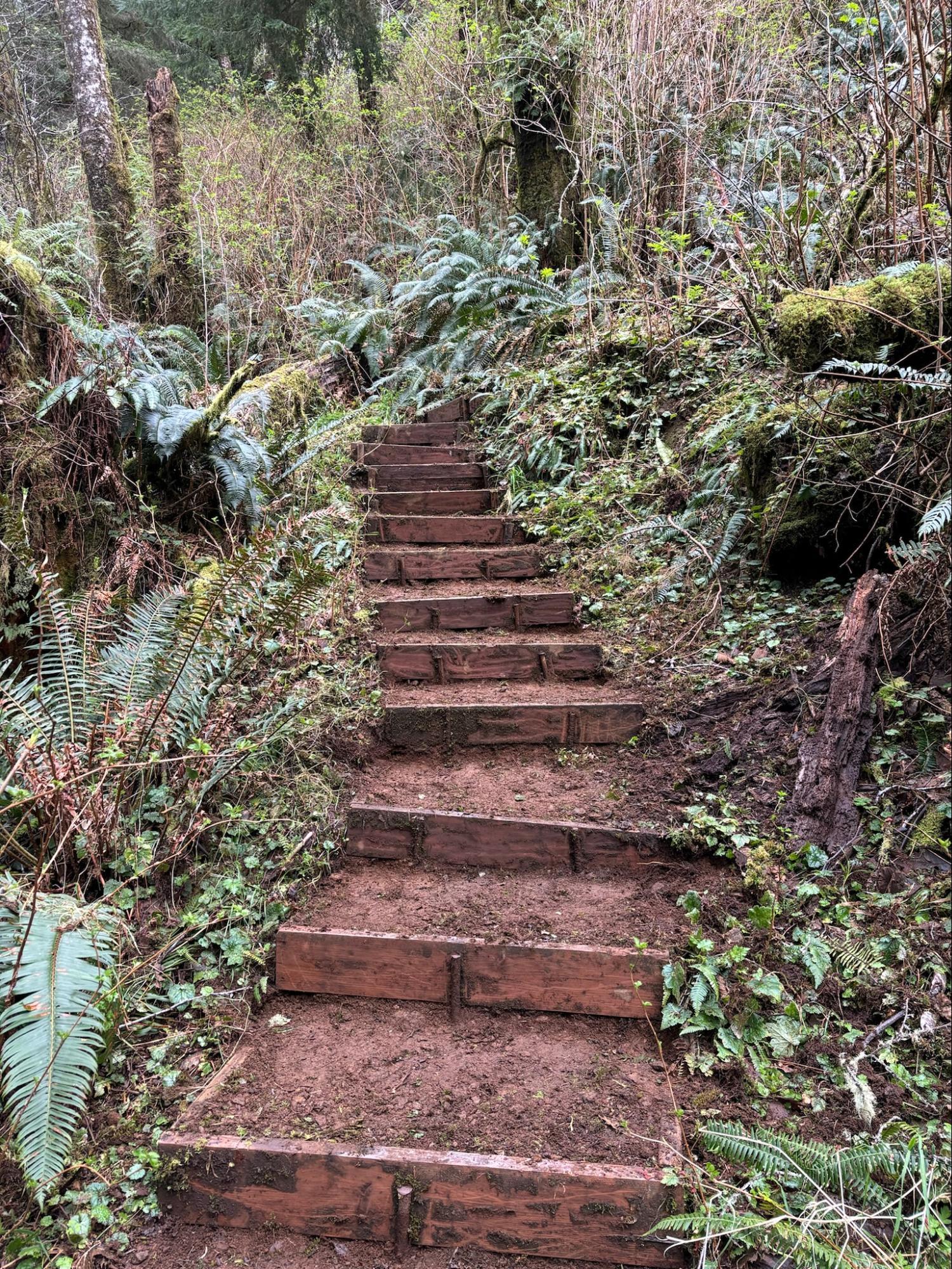
We also walked and helped clean up the grassroots tsunami trail with Elder Melissa Peterson, where she spoke about her efforts and the importance of the trail. She also shared her future goals, including repairing stairs, adding more railings, and keeping the trail clear after storms.