

Hosted by EarthScope-operated NSF National Geophysical Facility and CRESCENT
Explore Your Future: Geoscience Career Panel
A panel discussion with geoscientists sharing real-world experiences and career insights
About

EarthScope-operated NSF National Geophysical Facility and CRESCENT are co-hosting a virtual Geoscience Career Panel exploring the wide range of career opportunities available to students with a geoscience degree. Panelists will share insights into their career paths, current roles, and advice for navigating the geoscience workforce.
This panel will also explore the experiences of geoscience professionals navigating parenthood alongside their careers, including balancing family responsibilities with fieldwork, research, and travel; making decisions about family at different career stages; and finding support along the way. Through an open and honest conversation, panelists will share diverse perspectives on building fulfilling careers and families, recognizing that there is no single path or timeline.
🗓 Date: Wednesday, February 10, 2027
⏰ Time: 10:00–11:30 AM PT
📍 Location: Virtual (Zoom link provided upon registration)
🎓 Audience: Undergraduate and graduate students, early career scientists, and geoscience enthusiasts
🎥 Note: Session will be recorded


Meet the Panelists

Emily Zawacki
EarthScope Consortium
Moderartor
Emily Zawacki (moderator)
Science Communication Associate
EarthScope Consortium
Moderator Introduction:

Jack Loveless
Smith College
Jack Loveless
Professor of Geosciences
Smith College
Panelist Introduction:
….
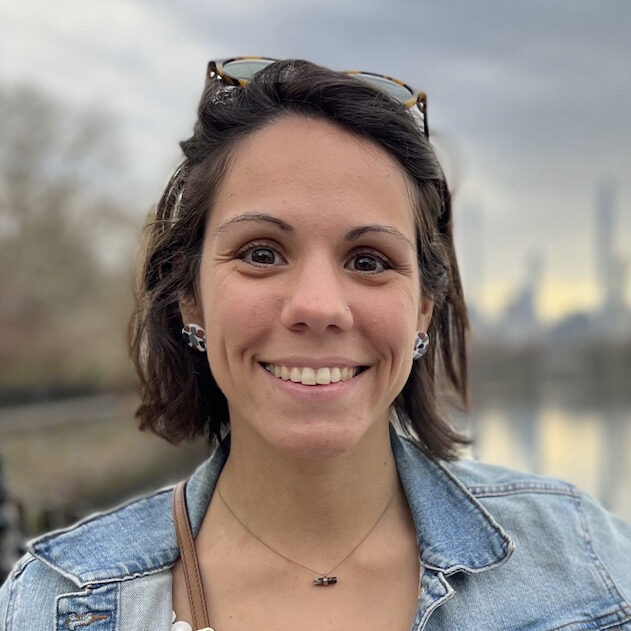
Eirini Poulaki
Louisiana State University
Eirini Poulaki
Assistant Professor
Louisiana State University
Panelist Introduction:
Dr. Eirini Poulaki is a structural petrochronologist studying tectonic processes by using the metamorphic rock record. She is an Assistant Professor at Louisiana State University. She grew up in Greece and received her undergraduate degree from the National and Kapodistrian University of Athens, followed by her M.S. and Ph.D. degrees from the University of Texas at Austin. She then completed a joint postdoc at the University of Washington and the Scripps Institution of Oceanography.
Eirini’s research is centered around the understanding of the nature of the fluid-rock interactions and the metamorphic and structural behavior of the lithosphere. Most specifically (1) the nature of deformation and fluid rock interactions along the subduction interface, which has implications for understanding modern subduction zone processes including hazards; and (2) constraining the pathways and influence of fluids during mantle exhumation including serpentinization, which controls strain localization in the lithosphere and has implications for deep-sea hydrothermal circulation, the biosphere, and carbon and hydrogen cycles.
Outside of work Eirini enjoys traveling, hiking, painting and spending time with her husband, (human) baby, dog and two cats!
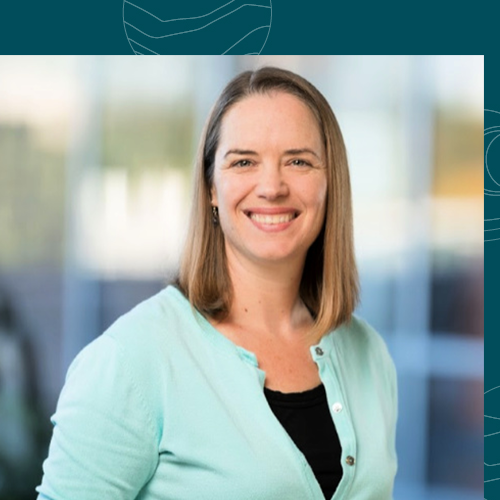
Ashley Streig
Washington Geological Survey
Ashley Streig
Earthquake Hazards and Geophysics Program Manager
Washington Geological Survey
Panelist Introduction:
Dr. Streig is the Earthquake Hazard and Geophysics Program Manager for the Washington Geological Survey. The Earthquake Hazards and Geophysics group uses geophysical tools and backgrounds in structural geology and tectonics to research faults, folds, basin structures, and site conditions for geologic mapping, subsurface characterization, and hazard evaluation. Dr. Streig’s research focuses on answering questions about active faults and folds, earthquakes and associated hazards, and earthquake frequency and magnitude. She is a CRESCENT Community Fault Model working group lead and member. Dr. Streig has worked both nationally and internationally on seismic source characterizations and paleoseismic investigations on Quaternary active faults. Ashley was a Professor at Portland State University for a decade, and a consultant in the Bay Area for over 5 years (WLA/FWLA), then attended University of Oregon for her PhD. In 2014 she received a National Science Foundation Postdoctoral Fellowship in Earth Science. In 2022 she received an NSF CAREER grant to expand research on upper plate fault deformation across forearc and backarc structures at the latitude of central Cascadia.


