
From Teaching to Research: A Paleoseismology Field Course
October 19, 2026
Written by Shannon Fasola – CRESCENT Geoscience Education & Inclusion Program Manager
The NSF-funded Cascadia Region Earthquake Science Center (CRESCENT), headquartered at the University of Oregon, works to deepen our understanding of Cascadia earthquakes and associated hazards, train the next generation of geoscientists, and strengthen collaboration between researchers, agencies, and communities (Melgar et al., 2026; Sahakian et al., 2026).
As part of this effort, CRESCENT offers Technical Short Courses for graduate students and early career professionals, providing advanced training in emerging geoscience methods and hazard applications. Courses are developed collaboratively by CRESCENT’s Science Working Groups and Geoscience Education and Inclusion Program Manager, Shannon Fasola.
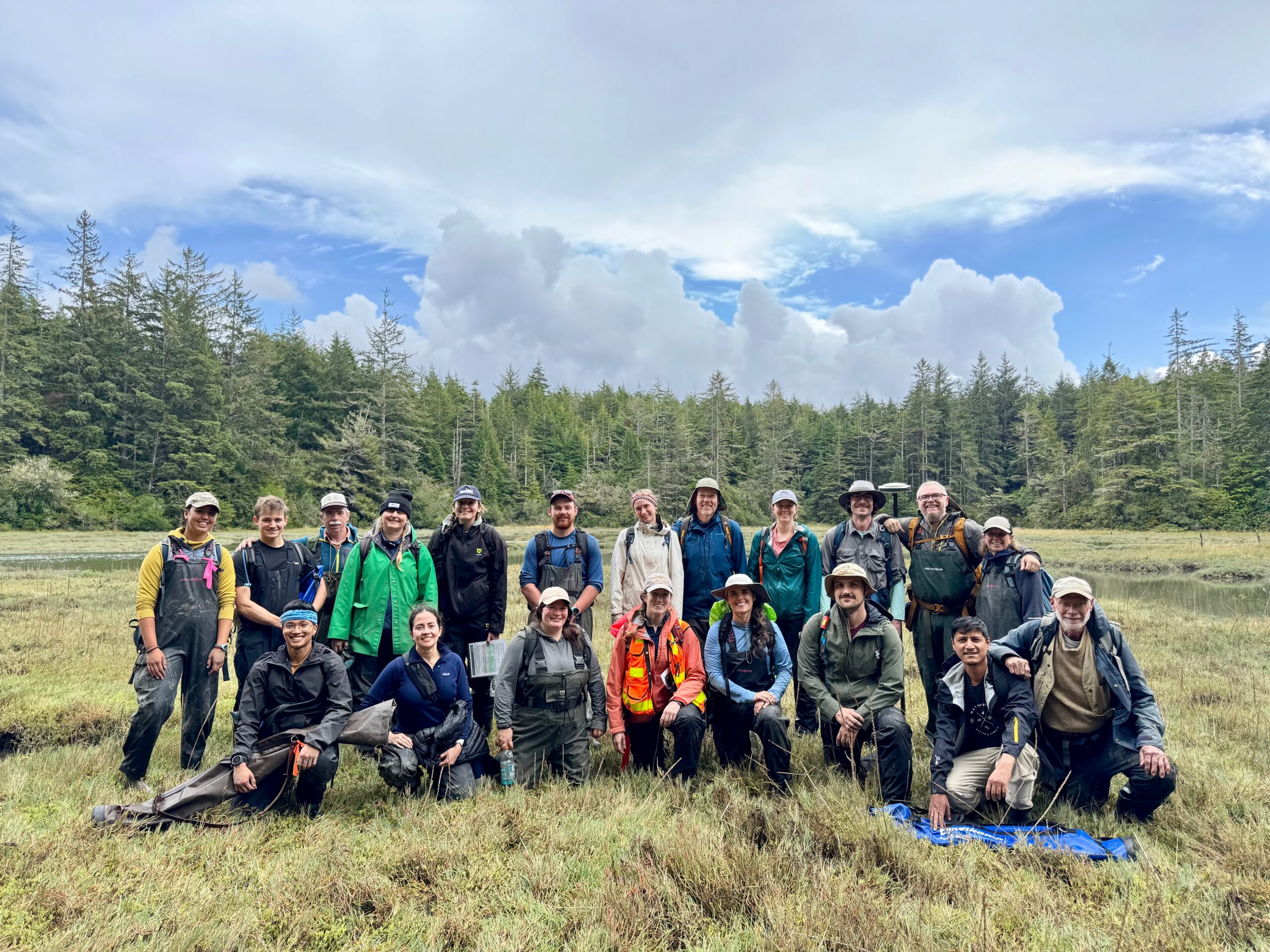
This summer, researchers from the Community Fault Model (CFM) and Cascadia Paleoseismology (CPAL) working groups joined forces to lead Reading the Earthquake Record: A Field Course in Paleoseismology (August 30–September 5, 2026). Thirteen participants from across the U.S. and Canada learned two complementary approaches to reading the earthquake record: trenching across faults and studying earthquake-related deposits preserved in coastal marshes. Coos Bay on Oregon’s southern coast provided field sites where participants could gain hands-on training while also contributing to ongoing CFM and CPAL research.
Learning in the Field
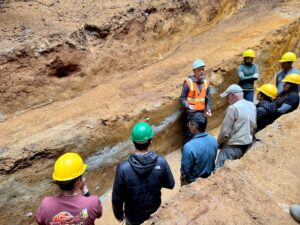
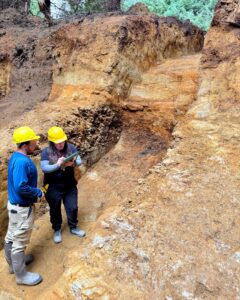
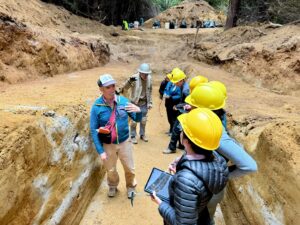
At the 7 Devils Trench, participants documented stratigraphy, fault structures, and evidence of past surface rupture on the Winchester Fault. Two weeks before the course, CFM and CPAL instructors, volunteers, and a local excavator prepared the approximately 22-meter-long trench on Coos County Forest property near Cox Canyon, immediately south of South Slough. The trench crossed an approximately 8-meter-high fault scarp and exposed several fault planes and important stratigraphic relationships. The Winchester Fault had previously been trenched in 1993 but was not yet included in the Community Fault Model. Re-trenching it provided an opportunity to teach participants while collecting new data to evaluate the fault for potential inclusion in the CFM.
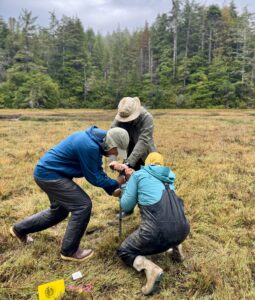
In South Slough, participants collected and systematically described sediment cores from Middle Creek Marsh, learning how buried marsh soils and abrupt changes from peat to tidal mud can preserve evidence of earthquake-related coastal subsidence. The group also identified possible evidence for tsunami inundation. The CPAL team chose the site so participants could do more than practice coring and sediment description—they could contribute data to an ongoing effort to better understand Cascadia’s earthquake history. Previous work by Ota and colleagues in 1995 had identified promising earthquake-related stratigraphy at Middle Creek, but the site had been explored with relatively few cores. The new fieldwork provided an opportunity to expand that record and build a stratigraphic framework spanning roughly 4,000 years.
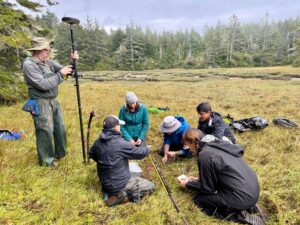
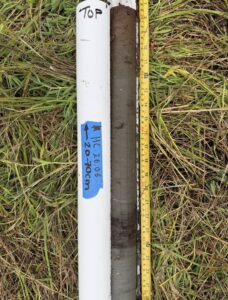
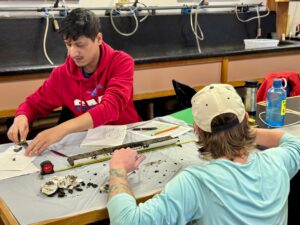
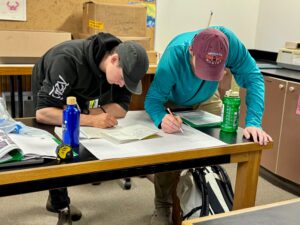
Participants took their field observations into the lab, combining individual core descriptions into marsh-wide cross sections and working together to correlate stratigraphic contacts. In just a few days, they progressed from learning basic methods to producing detailed core descriptions and stratigraphic correlations.
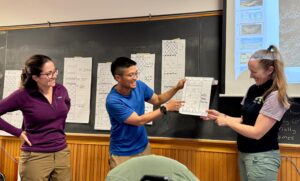
The course concluded with participant presentations. At the trench, they participated in a “trench review,” presenting their interpretations to researchers and experts from USGS, DOGAMI, WGS, the Coos County Forestry Department, the South Slough National Estuarine Research Reserve, and CRESCENT. The experience gave participants a chance to test their interpretations and experience the collaborative process of paleoseismic research.
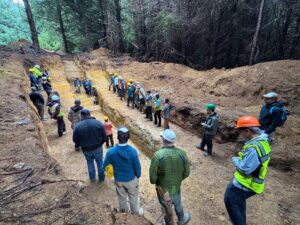
The course concluded with participant presentations. At the trench, they participated in a “trench review,” presenting their interpretations to researchers and experts from USGS, DOGAMI, WGS, the Coos County Forestry Department, the South Slough National Estuarine Research Reserve, and CRESCENT. The experience gave participants a chance to test their interpretations and experience the collaborative process of paleoseismic research.
CFM Lead Ashley Streig, who attended the trench review and stayed after the course to continue research at the site, captured the significance of the exposure: “I can’t emphasize enough, a trench with such beautiful stratigraphic relationships is a once in a lifetime opportunity for most paleoseismologists!”
The course also created professional development opportunities for early-career researchers. Postdoctoral scholars Becky Fildes (CFM) and David Bruce (CPAL) served as instructors, while graduate students Ethan Stowell (CFM) and Mira Anderberg & Kameron Finch (CPAL) helped prepare the field sites in advance and support instruction while participating in the course themselves. The experience allowed them to build both research expertise and skills in teaching, communication, and leadership.
Research Continues After the Course
Following the course, CFM researchers continued documenting the 7 Devils Trench to better constrain the timing of past earthquakes, characterize fault displacement, and evaluate the Winchester Fault for potential inclusion in the Community Fault Model. The data will also contribute to graduate student Ethan Stowell’s research, “One aspect of my master’s thesis involves understanding the uplift of the South Slough Syncline (Coos County, OR) and how it may connect to the broader structure of the forearc megathrust. Studying the dynamics of specific faults, like the Winchester fault at 7 Devils Trench, within the syncline gives great context to the bigger regional picture.”
The CPAL team also continued fieldwork at Talbot Creek, farther south in South Slough with the goal to target one of the longest records of Cascadia earthquake deformation preserved in the estuary. Previous studies at Talbot Creek identified six peat-to-mud contacts interpreted as sudden subsidence during great Cascadia megathrust earthquakes. That work also highlighted uncertainties in reconstructing the amount of land-level change from some of the older contacts, making the site particularly valuable for testing newer approaches. The team collected new cores spanning the sequence, including the 1700 CE earthquake and older events extending back approximately 4,000 years. A CRESCENT-funded CPAL graduate student will analyze the cores to develop new estimates of land-level change associated with as many as six Cascadia earthquakes. Together, the work at Middle Creek and Talbot Creek will help CPAL build a more detailed picture of how earthquake deformation has varied through time in South Slough.
More Than a Field Course
The course demonstrated how field-based training can serve both education and scientific discovery. Participants gained practical experience with paleoseismic methods while contributing to research that will continue beyond the course itself.
What began as a week of hands-on training became an opportunity for participants to help build the earthquake record, and for CRESCENT researchers to advance our understanding of Cascadia earthquake hazards at the same time.