

2026-27 Seed Grant Awards
CRESCENT Seed Grant Program

CRESCENT’s scientific needs are significant, and the ambitious work proposed could never be addressed by CRESCENT researchers alone. The CRESCENT Seed Grant Program was established to help achieve those aspirational goals by creating an opportunity to distribute CRESCENT resources to the broader community. The CRESCENT Seed Grant Program has the dual goals of broadening community participation and increasing the breadth of scientific investigations related to the center’s goals. The center invited the community to participate through a proposal call to address key scientific challenges identified through CRESCENT’s three major pillars:
- Science
- Geoscience Education and Inclusion
- Partnerships and Applications
Funded Seed Grants
2026-27 Awardees
This year we had 31 seed grant applicants of which 8 were funded.
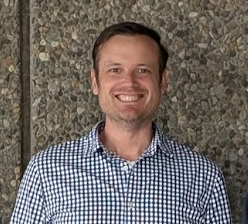
Jeffrey Beeson
Assistant Professor
Oregon State University
Building a Community-Ready Cascadia Offshore Subbottom Profile Database to Assess Quaternary Fault Activity
Jeffrey Beeson, Assistant Professor at Oregon State University
This project will compile, standardize, and quality-control existing offshore Cascadia subbottom profile (SBP) datasets to create a community-ready, FAIR-compliant geospatial database which will support targeted late Quaternary fault activity assessments for two priority structure zones: the landward-vergent splay corridor offshore Washington and northern Oregon, and the central Oregon shelf. These high-resolution datasets provide critical constraints on the shallow expression of upper-plate faulting but remain fragmented across agencies, institutions, and legacy formats, limiting their integration into hazard-relevant frameworks such as CRESCENT’s CFM.
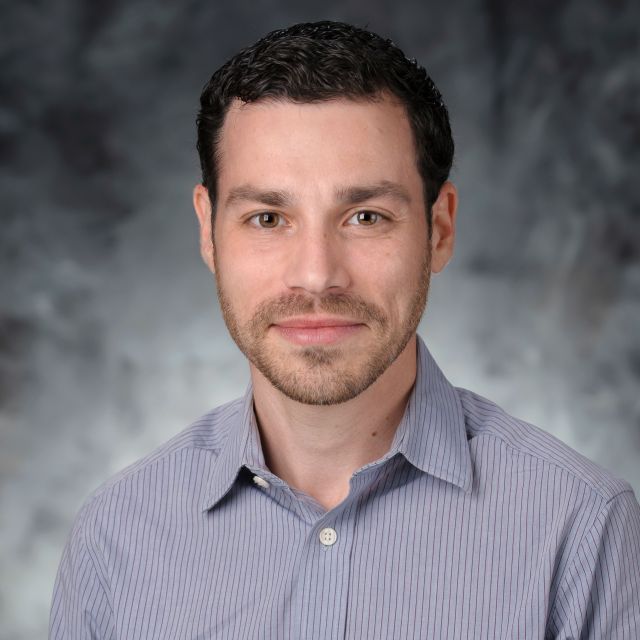
Zachary Eilon
Associate Professor
University of California Santa Barbara
Supporting Student-Led Seismology Training, Professional Development, and Cross-Pacific Science Communication at the 2026 Seismology Student Workshop
Zachary Eilon, Associate Professor at University of California Santa Barbara
Collaborators: Helen Janiszewski (University of Hawaii), Hiba Kunwer (Georgia Tech), Ian Wynn (University of Hawaii), Sarah Nolan (Cornell University), Iván Rojas-Churkovic (University of Hawaii), Cristhian Salas (University of California Santa Barbara), and Pablo Urra-Tapia (University of Hawaii)
This project will support the 13th Seismology Student Workshop (SSW), a student-led forum for sharing advances in seismic analysis, discussing scientific and career-building experiences, and fostering connections among the next generation of seismologists. Funding will provide travel support for three student organizers, whose participation is essential to the continued organization and success of the workshop, as well as a travel grant to increase accessibility for an additional student participant.
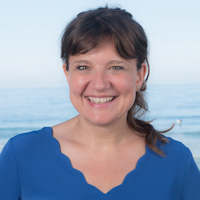
Alice Gabriel
Associate Professor
Scripps Institution of Oceanography, University of California at San Diego
CFM-based splay-fault controls on Cascadia tsunami generation in fully-coupled dynamic rupture-tsunami models
Alice Gabriel, Associate Professor at Scripps Institution of Oceanography, University of California San Diego
Collaborators: James Biemiller (Portland State University), Rebecca Fildes (Western Washington University), Anna Ledeczi (University of Washington), and Fabian Kutschera (University of California San Diego)
This project will use supercomputing and 3D fully coupled dynamic rupture simulations to investigate how realistic offshore splay-fault geometries and off-fault plastic deformation influence shallow seafloor displacement and tsunami generation during Cascadia megathrust earthquakes. By comparing rupture scenarios with and without splay-fault activation and varying hypocenter location and host-rock response, this project will improve understanding of tsunami sources and provide open, reusable earthquake-tsunami model products for CRESCENT hazard-assessment workflows.
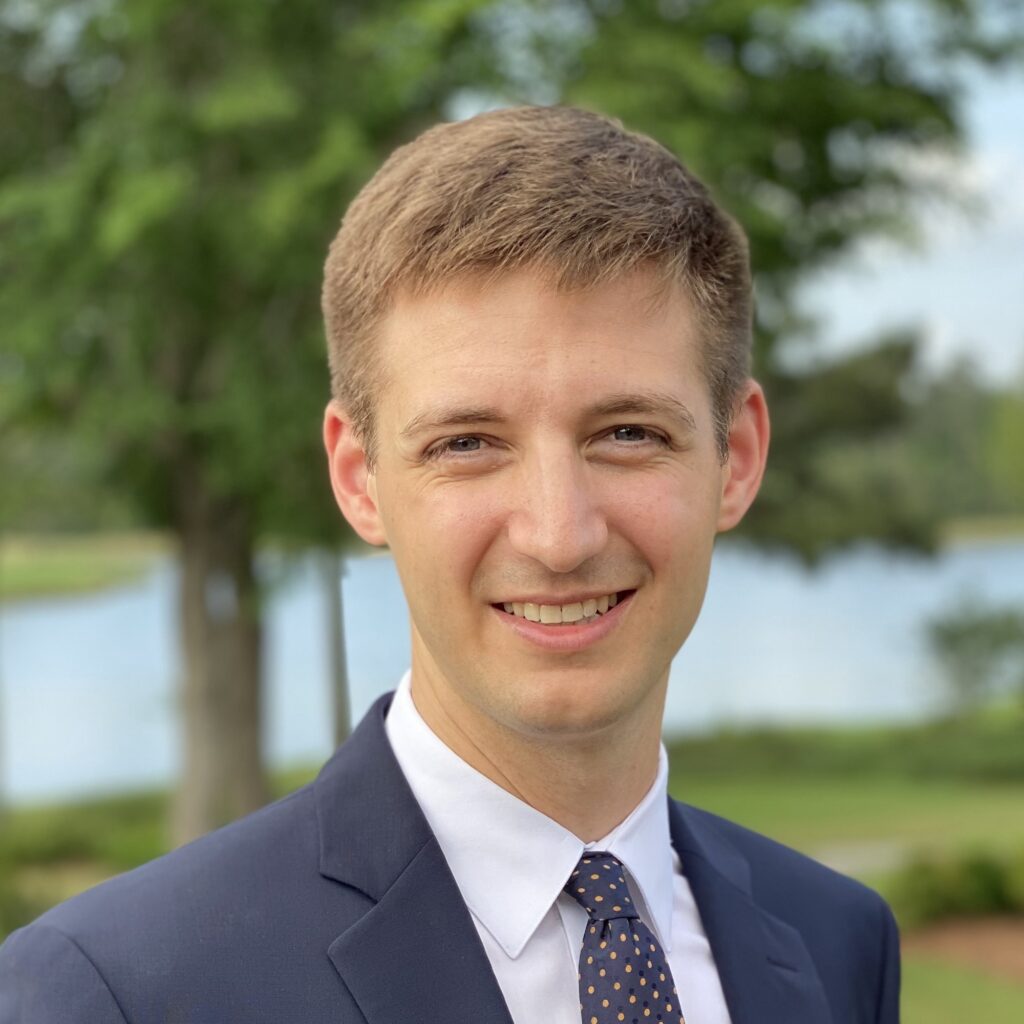
Stefan Henneking
Research Associate
The University of Texas at Austin
Optimizing Offshore Sensor Placement for Real-Time Probabilistic Tsunami Forecasting in Cascadia
Stefan Henneking, Research Associate at The University of Texas at Austin
Collaborators: Omar Ghattas (The University of Texas at Austin) and Alice-Agnes Gabriel (University of California San Diego)
This project aims to (1) determine the number of seafloor sensors required for accurate Cascadia tsunami forecasting; and (2) identify optimal sensor configurations to minimize forecast uncertainty. By delivering quantitative, uncertainty-aware guidance for cost-effective offshore sensor placement, this project will advance CRESCENT’s DET priorities in physics-based tsunami simulation and TSHA goals in tsunami hazard uncertainty quantification, while supporting its broader mission to translate Cascadia earthquake science into actionable hazard information.
Farahnaz Soleimani
Assistant Professor
Oregon State University
Translating Cascadia Earthquake Scenarios into Bridge Functionality and Corridor Access Consequences for the US 101 Newport–Waldport Lifeline Corridor
Farahnaz Soleimani, Assistant Professor at Oregon State University
This project will develop a prototype framework to translate representative Cascadia earthquake scenario inputs into bridge functionality and corridor access consequences for the US 101 Newport–Waldport corridor, a compact but high-value coastal lifeline segment anchored by the Yaquina Bay Bridge and Alsea Bay Bridge. By creating a practical translation pathway from hazard science to infrastructure actionability, the project will strengthen the role of CRESCENT research in supporting coastal transportation resilience in Cascadia.
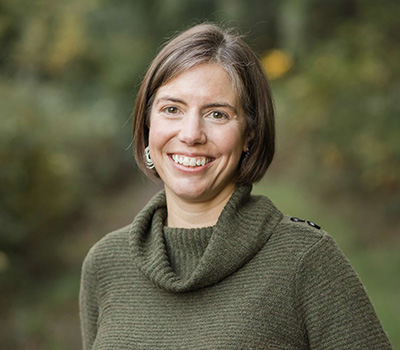
Jenna Tilt
Associate Professor
Oregon State University
Partnerships in Advancing Leadership for a resilient Society (PALS)
Jenna Tilt, Associate Professor at Oregon State University
Collaborators: Felicia Olmeta-Schult (Oregon State University), Beatriz Botello (Oregon State University), and Andrea Mah (Oregon State University)
The goal of Partnerships in Advancing Leadership for a resilient Society (PALS) is to train emerging leaders from Tribal and Latine communities to advocate for Cascadia Subduction Zone hazard mitigation and resilience through a bottom-up, community-centered approach. By co-developing and delivering culturally relevant learning modules with community leaders and external organizations, the project will strengthen hazard knowledge, leadership confidence, and cross-community partnerships while advancing CRESCENT Partnerships and Applications priorities for inclusive and equitable resilience.
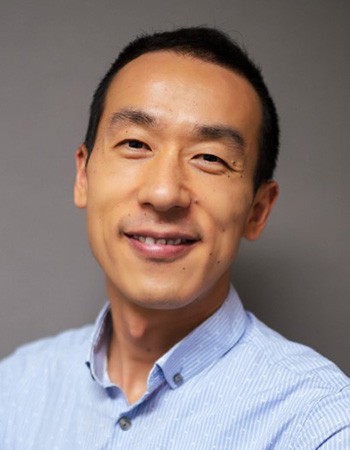
Surui Xie
Assistant Professor
University of Houston
Quantifying the Impacts of Sound Speed Uncertainty on GNSS-Acoustic Seafloor Geodesy: Applications to Cascadia
Surui Xie, Assistant Professor at University of Houston
This project will systematically evaluate how sound speed uncertainty influences GNSS-A seafloor positioning in Cascadia and develop an improved framework for uncertainty characterization. The proposed research directly supports CRESCENT Offshore Observations priorities by improving interpretation and uncertainty assessment of emerging offshore geodetic datasets in Cascadia, supporting future megathrust coupling models, seismic hazard assessments, and broader applications of GNSS-A seafloor geodesy.
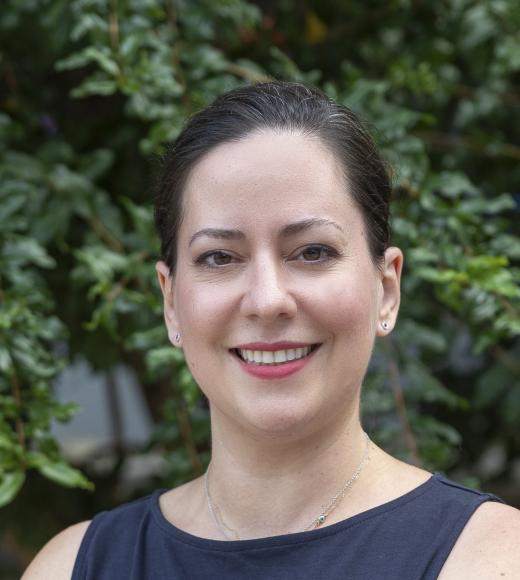
Katerina Ziotopoulou
Professor
University of California Davis
Response of Embankment Systems to Cascadia Subduction Zone Motions: Validated Nonlinear Dynamic Analyses to Refine Ground Failure Hazard
Katerina Ziotopoulou, Professor at University of California Davis
Collaborator: Trevor J. Carey (University of Toronto)
This project will develop and validate nonlinear dynamic analysis models of embankment systems subjected to long-duration, broadband Cascadia subduction zone motions using centrifuge test results. By systematically evaluating duration-sensitive, liquefaction-driven mechanisms across loading conditions representative of Cascadia earthquakes, this project will improve ground failure assessments and provide actionable guidance for the seismic resilience of embankment infrastructure.
