
P&A Workshop 2026
July 16, 2026
Aligning Earthquake Scenarios with User Needs Across Cascadia
By Autumn Lukens, Oregon Hazards Lab
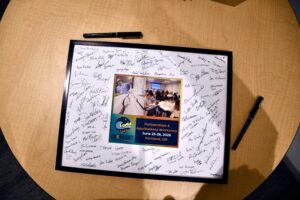
On June 25-26, more than 140 earthquake scientists, emergency managers, Tribal representatives, engineers, utility operators, and community leaders gathered at the University of Oregon’s Portland campus to tackle a common question that spreads across their fields: How can science better support decisions before, during, and after the next major Cascadia earthquake?
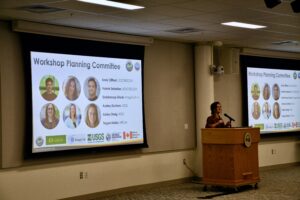
Hosted by the Cascadia Region Earthquake Science Center (CRESCENT), the third annual Partnerships & Applications (P&A) Workshop focused on turning earthquake science into practical tools that help communities prepare for, respond to, and recover from earthquakes and related hazards.
This year’s theme, “What’s the Scenario? Aligning Earthquake Science and Resilience Planning Across Cascadia,” reflected an ongoing need to connect researchers with the people responsible for making critical decisions during disasters. While they do not predict the future, scenarios offer realistic, scientifically credible events that help organizations prepare for high-consequence disasters before they happen. Building on conversations from previous workshops, participants explored how earthquake scenarios can better inform emergency planning, infrastructure resilience, public communication, and scientific coordination for a seismic event in the Pacific Northwest.
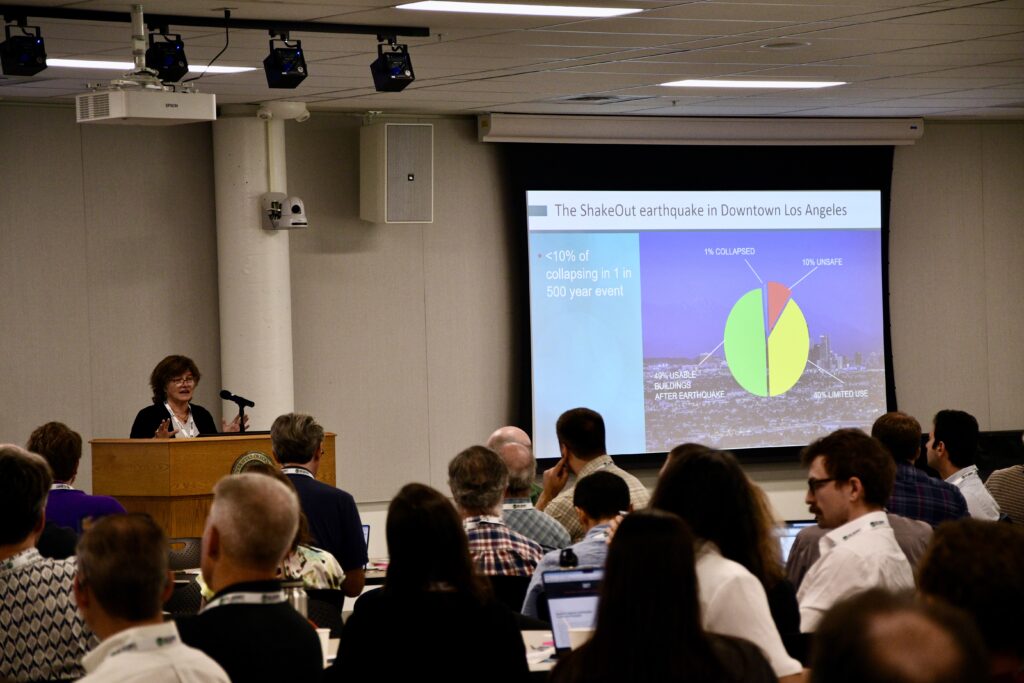
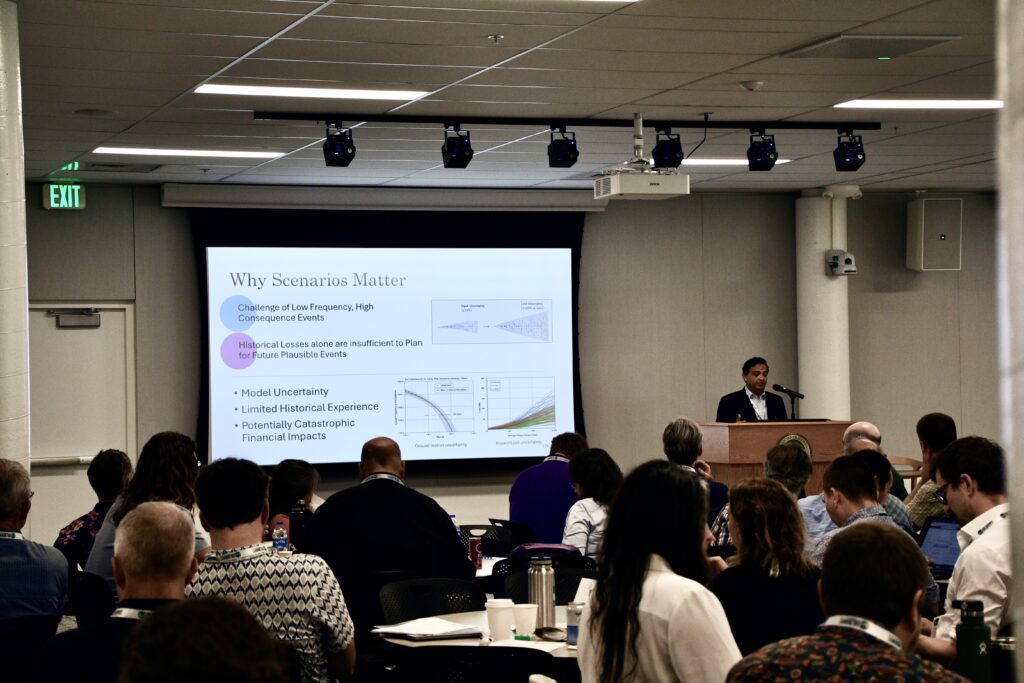
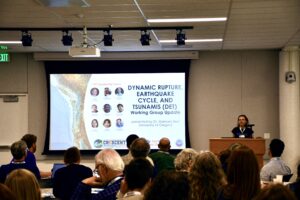
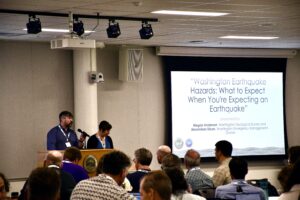
The workshop featured presentations on earthquake scenarios from around the Ring of Fire, including California’s HayWired Scenario, Washington’s Cascadia Rising exercise, Canada’s national seismic risk modeling efforts, and New Zealand’s award-winning Alpine Fault Magnitude 8 program. For Svetlana Lazarev, a first-time attendee and hazardous waste manager with the Oregon Department of Environmental Quality, one of the workshop’s biggest takeaways was seeing prevention discussed alongside emergency response.
“Everything I’ve heard here reinforces the importance of prevention,” Lazarev said. “We can’t prevent the earthquake, but we can prevent the catastrophic damage caused by an earthquake. Prevention is our only way to reduce those impacts.”
Participants emphasized that future planning must better reflect the wide range of potential Cascadia earthquakes. While most planning centers on a magnitude 9 Cascadia Subduction Zone earthquake, attendees identified a gap in additional scenarios involving smaller subduction earthquakes, crustal faults, earthquake sequences, and tsunami combinations. They also noted a need to study cascading hazards affecting transportation, communications, utilities, and communities.Throughout the workshop, attendees repeatedly identified communication and coordination as challenges equal in importance to scientific research. Lazarev said bringing together scientists, regulators, engineers, and emergency managers allows every discipline to contribute.
“Everyone brings their own perspective and knowledge,” she said. “The research coming from academia is incredible, and it’s super important that we bring different perspectives into preventing and solving these issues.”
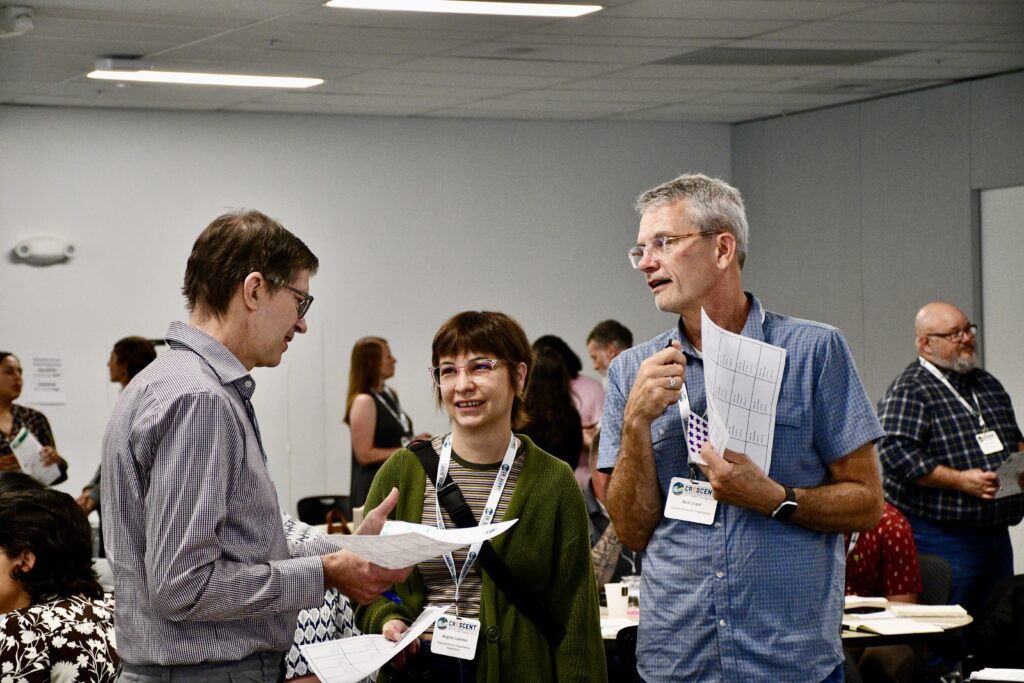
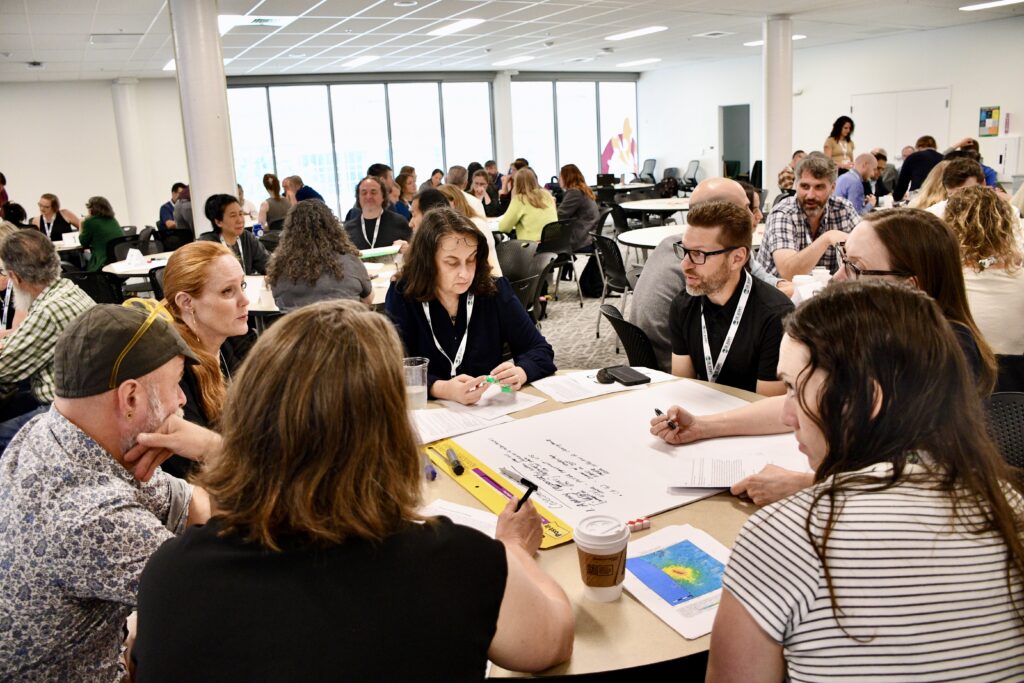
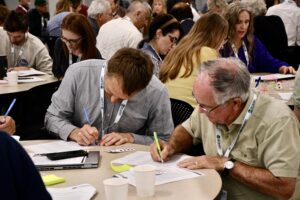
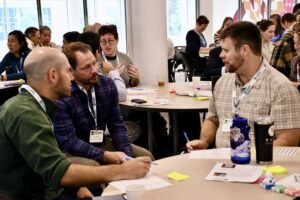
Break-out groups discussed the need for shared data standards, interoperable information systems, and coordinated clearinghouses for post-earthquake reconnaissance. They also called for stronger partnerships across state, national, and disciplinary boundaries. Participants explored ways to improve communication between researchers and emergency managers to ensure scientific data is both actionable during response and useful for long-term planning.
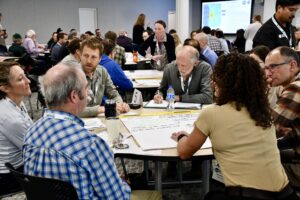
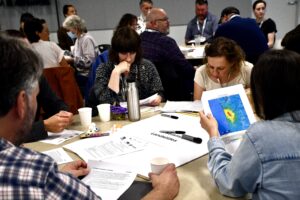
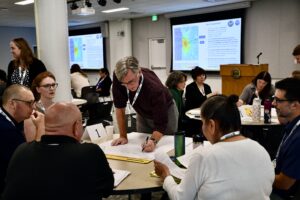
The second day featured a tabletop earthquake exercise simulating realistic response decisions. The exercise highlighted the complexity of coordinating damage assessments, public communication, resource deployment, and scientific data collection across multiple jurisdictions and organizations during the first hours following a major earthquake.
The connection between research and implementation stood out to Elizabeth Hearn, an assistant coordinator with the U.S. Geological Survey’s Earthquake Hazards Program and a first-time workshop attendee.
“Coming from academia, I’ve spent a lot of time thinking about how we create the science,” Hearn said. “What I really wanted to learn was how that science gets translated into decisions. That’s the piece that’s been fascinating to me.”
At the workshop’s conclusion, participants rallied around ideas for areas in which to focus continued collaboration. These included expanding the range of available earthquake scenarios, improving the operational use of those scenarios, strengthening consideration of critical infrastructure, and developing better data-sharing systems. In support of its overarching mission to increase regional seismic resilience, CRESCENT looks forward to continuing to provide a forum for these ideas to develop – be it thorough convening focus groups, collaborating on grant applications, or providing science expertise for new scenarios products and exercises.