

Foundational Articles on CRESCENT Published
in Seismological Research Letters
July 10, 2026
We are excited to announce the publication of two foundational articles on CRESCENT in Seismological Research Letters. Together, these papers establish the scientific, community engagement, and educational vision and framework for CRESCENT and serve as the foundational references for CRESCENT. As you publish, present, and share CRESCENT-related work, please cite these articles whenever appropriate.
These publications reflect the collaborative spirit of CRESCENT and we are grateful to all those who contributed. As CRESCENT continues to evolve, we welcome your ideas for new collaborations, research directions, and opportunities to translate our science into societal impact.
Best,
Diego Melgar, Director
Valerie Sahakian, P&A Lead
Abstract
The Cascadia subduction zone (CSZ) is capable of producing large megathrust earthquakes and tsunamis, posing substantial risks to the Pacific Northwest. This article examines the seismic characteristics of the CSZ, including its offshore coupling, sparse seismicity, and a complex paleoseismic record. Recent advances in geophysical methods and data collection have improved our understanding of subduction zone processes, but important uncertainties remain regarding rupture dynamics, ground shaking, and tsunami impacts. The Cascadia Region Earthquake Science Center (CRESCENT) has been established to address these challenges through coordinated research, education, and community engagement. By integrating scientific studies, fostering collaboration, and leveraging new technologies, CRESCENT seeks to improve hazard assessment and resilience in the region. This article outlines the primary challenges and opportunities for advancing subduction‐zone science and supporting societal preparedness for future CSZ events.
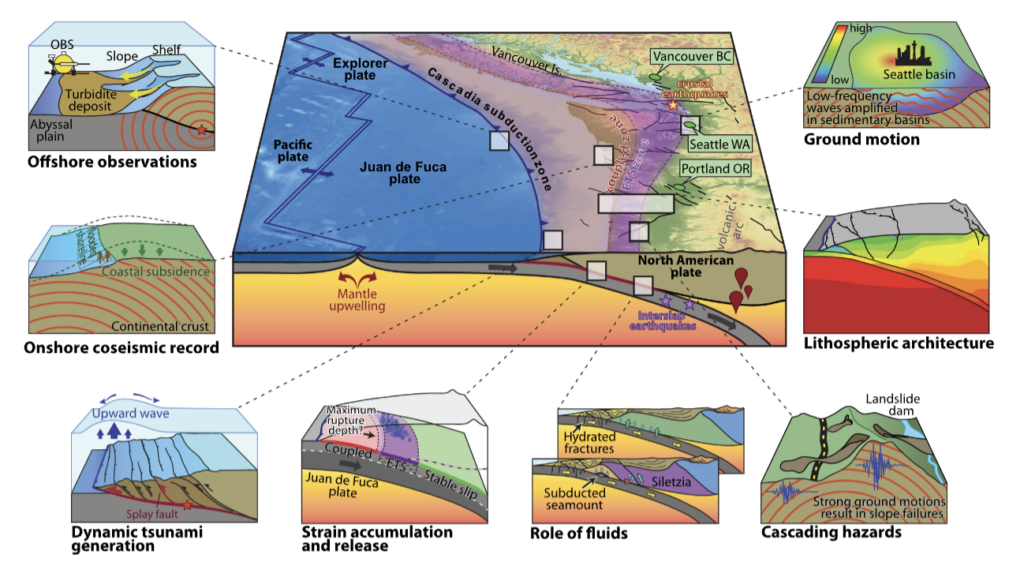
Citation (please use when referencing Science pillar):
Melgar, D., A. M. Thomas, V. Sahakian, P.-E. Share, A. Meigs, H. Tobin, L. Staisch, T. Melbourne, J. Elizabeth, R. Ajala, et al. (2026). The Cascadia Region Earthquake Science Center (CRESCENT): Advancing Understanding of Cascadia’s Earthquake Hazards, Seismol. Res. Lett., doi: 10.1785/0220250318
Abstract
The Cascadia subduction zone poses significant risks to the Pacific Northwest, from shaking, tsunami inundation, and cascading hazards. Among the challenges to improving resilience are the effects of a less mature “earthquake culture” than other seismically active regions (in science and preparedness) and gaps in the workforce (in community representation and technical training). The Cascadia Region Earthquake Science Center (CRESCENT) has been established to address these challenges through research, education, and community engagement. By integrating scientific studies, fostering collaboration, and leveraging new technologies, CRESCENT seeks to improve hazard assessment and resilience in the region. This article outlines the novel regional framework for how the center’s structure provides science‐to‐practice approaches for equitable and inclusive workforce development, societal preparedness, and seismic resilience. This framework draws on existing models of codesigned research to propose an academic‐regional partnership model that may be applicable to future endeavors.
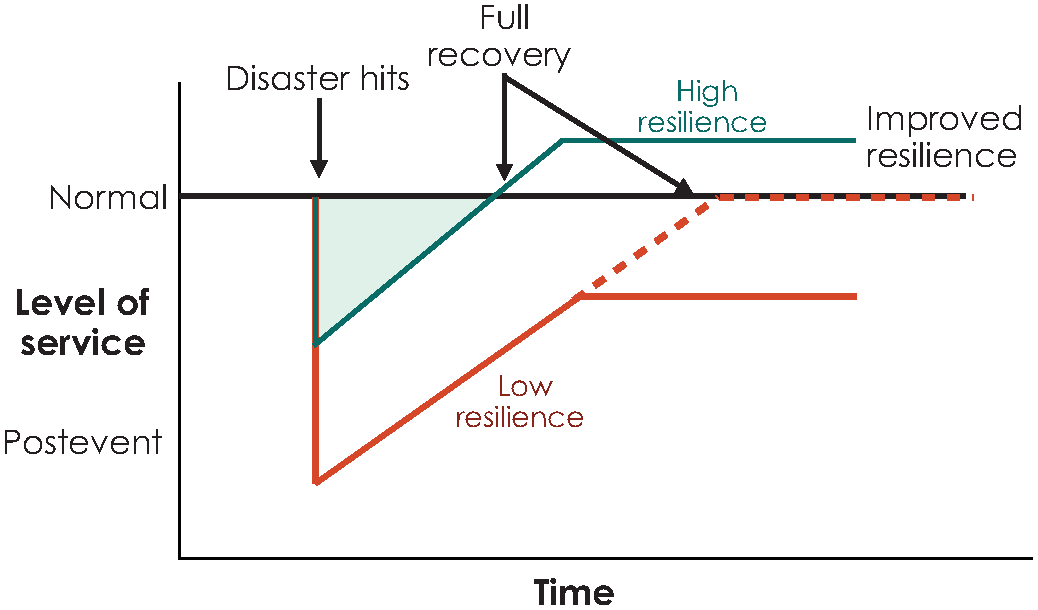
Citation (please use when referencing P&A and GEI pillars):
Sahakian, V. J., A. J. Meigs, A. Clifford, S. Fasola, D. Melgar, A. M. Thomas, P.-E. Share, H. Tobin, T. Melbourne, J. Elizabeth, et al. (2026). The Cascadia Region Earthquake Science Center (CRESCENT): Regional Science in a Resilience Context, Seismol. Res. Lett., doi: 10.1785/0220250423.
