Science

Small Grants

2026-27 Seed Grant Awards

The CRESCENT Seed Grant Program has the dual goals of broadening community participation and increasing the breadth of scientific investigations related to the center’s goals. The center invited the community to participate through a proposal call to address key scientific challenges identified through CRESCENT’s three major pillars. This year we had 33 seed grant applicants of which 11 were funded.

2026-27 Seed Grant Awards Read More »
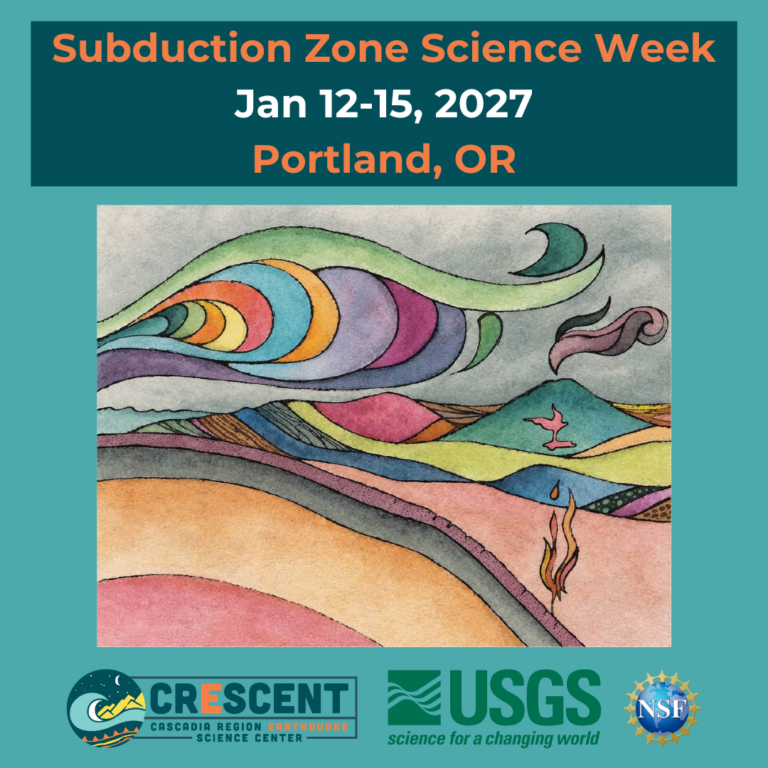
Subduction Zone Science Week 2027

January 12-15, 2027
Subduction Zone Science Week will convene the nation’s leading subduction zone researchers, federal scientists, engineers, and community partners to integrate global and Cascadia-focused knowledge across earthquakes, tsunamis, volcanoes, landslides, and cascading hazards.

Subduction Zone Science Week is co-organized by the USGS and CRESCENT to focus broadly on the subduction zone natural hazards and community resilience. The goals are to:
– Foster collaboration between subduction zone and multi hazard researchers;
– Bridge gaps, and increase communication among subduction zone research groups; and
– Identify and encourage synergistic collaborative activities in U.S. and global subduction zones.

Subduction Zone Science Week 2027 Read More »

DET Topical Workshop

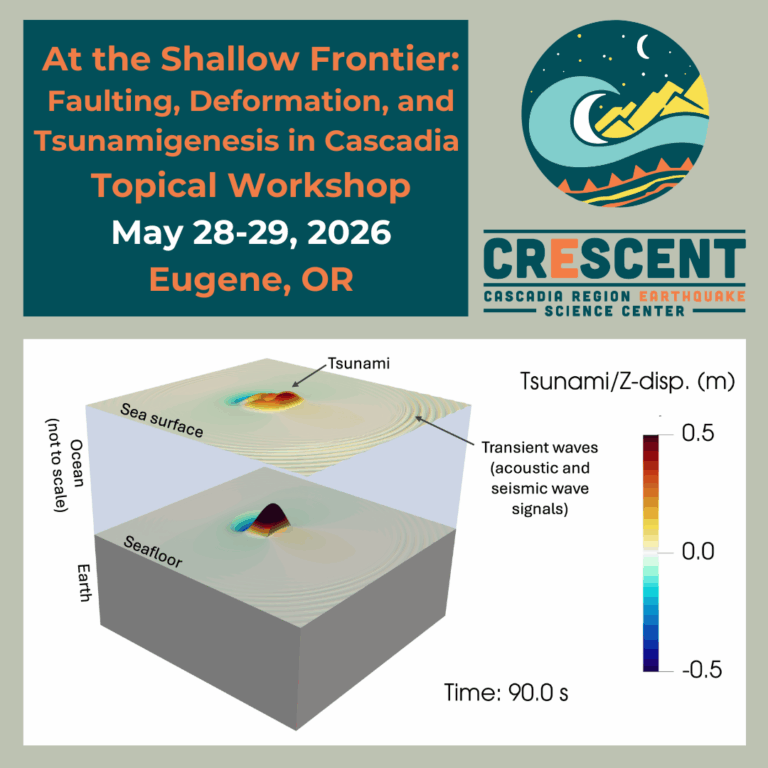
This interdisciplinary workshop aims to integrate experimental, imaging, and modeling studies on shallow faulting and deformation and tsunamigenesis for the Cascadia Subduction Zone.  We welcome participants interested in frictional fault properties, aseismic slip, fluid pressure, splay faulting, off-fault deformation, acoustic laboratory studies, seafloor geodesy and remote sensing, and offshore DAS.  The workshop will generate a community white paper focusing on how to better account for the complexity of shallow deformation to assess tsunami hazard for Cascadia. 

DET Topical Workshop Read More »

New CRESCENT Product Releases

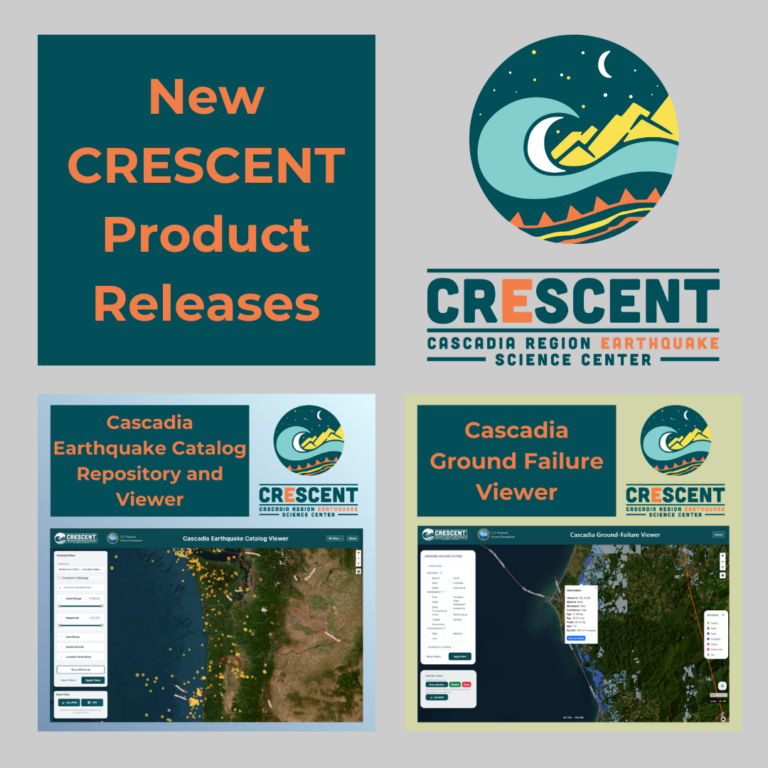
We are excited to announce the release of two new open resources developed through CRESCENT: the Earthquake Catalog Repository and Viewer and the Cascadia Ground Failure Viewer. These platforms provide curated datasets and interactive visualization tools for exploring seismicity and ground-failure processes in Cascadia, supporting research, education, and hazard assessment.

New CRESCENT Product Releases Read More »

TSHA SIG Announcement

We are delighted to announce the formation of a new CRESCENT Special Interest Group – the Tsunami Sources for Hazard Assessment SIG (TSHA SIG).

See the TSHA webpage for more information and opportunities to contribute and follow the work of this SIG.

TSHA SIG Announcement Read More »

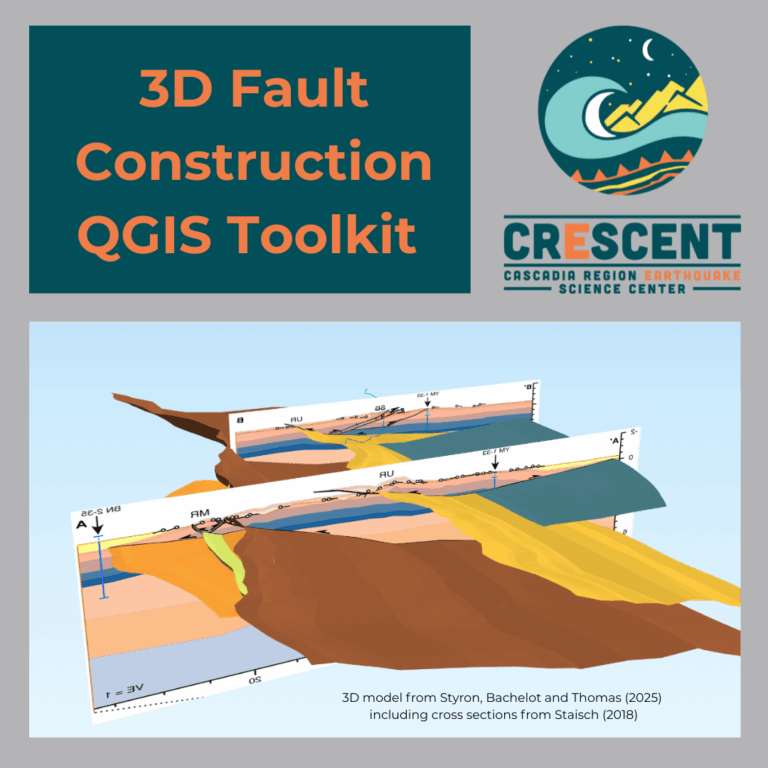
QGIS Toolkit Product Release

CRESCENT is pleased to share a new set of open-source tools for building realistic 3D fault surfaces directly in QGIS (a free, cross-platform GIS application). These tools are designed to help researchers create non-planar, data-constrained fault geometries from standard geologic and geophysical inputs, including geologic maps, balanced cross-sections, seismic images, and earthquake hypocenters.

QGIS Toolkit Product Release Read More »

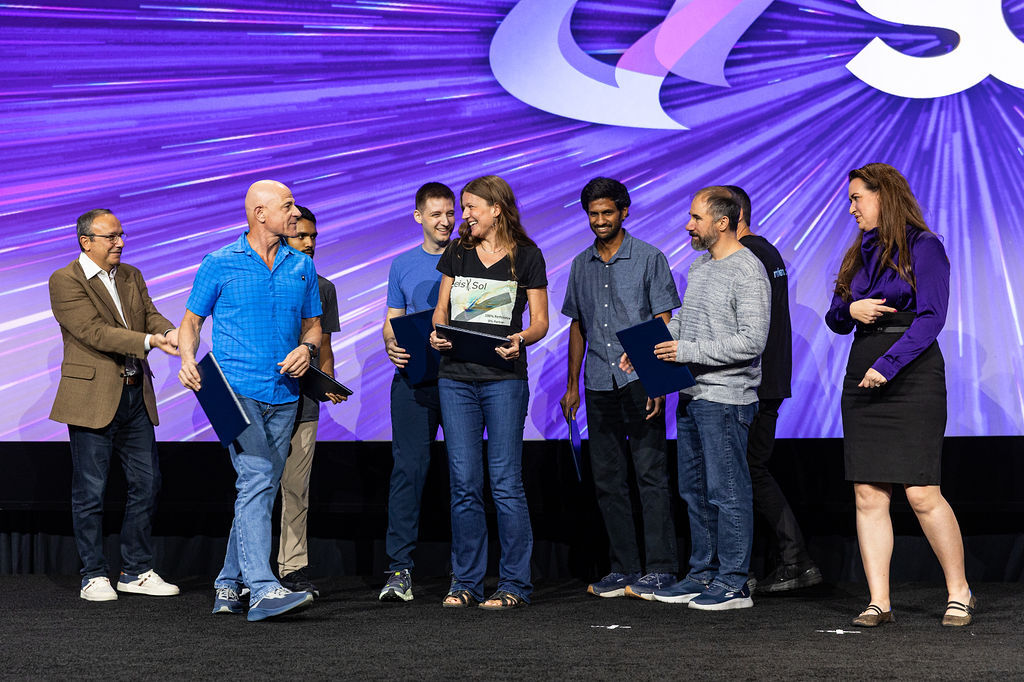
Tsunami Forecasting Breakthrough Earns Gordon Bell Prize

We’re thrilled to share that a team led by Stefan Henneking and Omar Ghattas at UT Austin has been awarded the ACM Gordon Bell Prize for their work on real-time tsunami forecasting in Cascadia. The author team also includes CRESCENT senior personnel Alice-Agnes Gabriel, from UC San Diego, who leads our Dynamic Rupture, Earthquake Cycles, and Tsunamis (DET) working group and showcased this work at our annual meeting in Seattle last month.

Tsunami Forecasting Breakthrough Earns Gordon Bell Prize Read More »

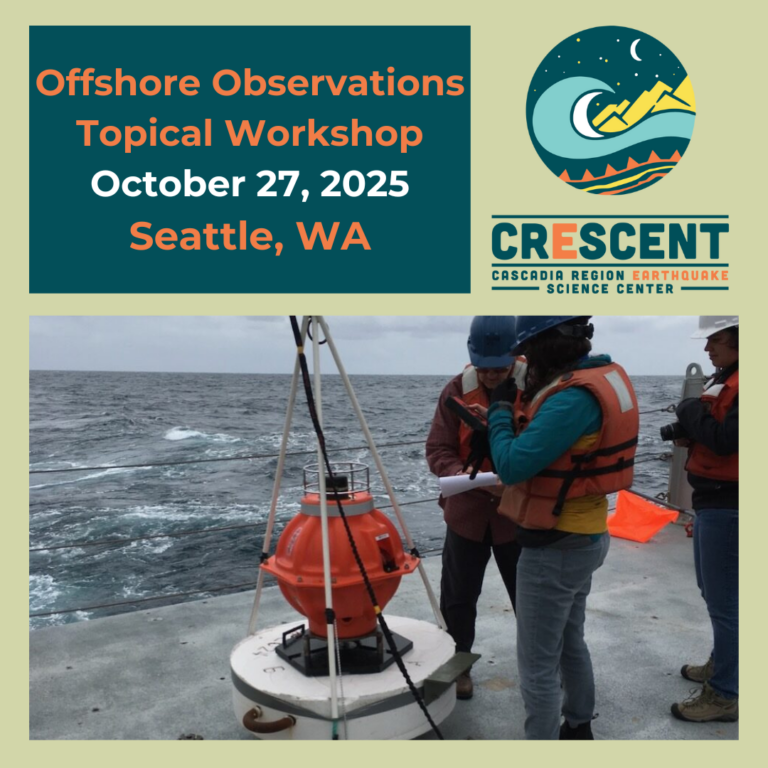
Offshore Observations Topical Workshop

In an effort to coordinate future offshore science in Cascadia, we are designing the Offshore Observations workshop to bring together geoscientists across a variety of disciplines that use offshore datasets to study subduction zones. The workshop will comprise a series of short talk sessions followed by breakout groups. Session topics include fluid pathways and hydrology of subduction zones, constraints on megathrust locking state and shallow slow slip, accretionary wedge deformation, structure of the incoming plate, and future plans for ocean drilling, fiber-optic sensing, and cabled infrastructure.

Offshore Observations Topical Workshop Read More »